Showing posts with label Intention. Show all posts

Monday, February 7, 2011

How to Understand The Epicureans on Emotion, Part II of II

As I explained in the last post, Epicureans believe that we all have a fundamental desire to pursue pleasure, and that to fulfill this desire, we'll actually sometimes have to avoid some pleasures. Specifically, we need to avoid pain-creating pleasures (e.g. doing hard drugs) and even pursue pleasure-creating pains (e.g. taking awful-tasting medicine).

That's certainly a tough lesson for many to learn, but it has the ring of truth to it, and, at least in my case, experience says it's often true. Perhaps you're one of the lucky ones who think all this is rather obvious and that there's not much to see here. Either way, lets look a little deeper because there's plenty more to see.

Do we really ALWAYS act to avoid pain and fear / to get pleasure?

Taking the claim that we always act to seek pleasure / avoid pain at face value may seem at times brilliantly simply and at other times a cliché or an uninformative tautology.

Consider the following:

1. Pleasure is the avoidance of pain

2. All action is to avoid pain

3. If its true that when our desires are eliminated, we do not act, then when we eliminate pain, we do not act until there is another possibility of removing pain.

That is, it appears what we're agreeing to is that when we succeed in eliminating pain, we cease to have desires, and so we cease to have any reason to act, so we don't act.

Does that have the ring of truth or sound like a tautology? Hardly. Its actually a strange thing to consider. I mean, I can imagine you could argue that someone in a drunk stupor, high on drugs, having just achieved orgasm or having completed a delicious meal could be 'sated' in such a way as to have no desire to do anything.


Homer, having achieved the absence of pain, ceases to act

For a time. Specifically, until some other 'pain' interferes with our state of repose.  But then all we really seem to have learned is that we'll always be hungry and that the effort to satisfy certain hungers will pay off longer or better than others. But Plato and Aristotle already made that very clear.

So what in the world are we really saying in agreeing with the 'obvious' truths that pleasure is the absence of pain and all action is to avoid pain?

What's really happening here?

Ask yourself this - what actually happens when you, by luck or by careful planning, act in a way that truly maximizes your pleasure?

The first thing that occurs to me in asking myself that is that in such cases its highly likely that it involved a lot more than a stroke of luck, my brain - more or less consciously - was deeply involved. And the more such 'maximized pleasure' moments one has, the more likely it is that more than just luck was involved.

So the first thing I'd feel good about concluding is that some of the times that I really maximize my pleasure require a bit of thought. But I also have to accept that other times its more the case that I fell back on some training - which may have required thought in the past, but little now.

For example, the goal of having a tasty snack is a simple, good goal. It doesn't require a whole lot of thinking. But in fulfilling it you do have to have the implicit awareness that not everything that looks tasty is tasty.

So when reaching into the cookie jar for some Oreos, you might recall the time you accidentally got some nasty off-brand cookie and so double check what you pulled out this time. That would be 'goal awareness' plus 'realizing' or 'knowing' that looks can be deceiving.

The epicurean maxims we've been discussing can handle this. And actually, thats nice - in a way they are saying we can judge without deliberating. That's a good thing, and its in agreement with P-A-L. But there's going to be a few problems.

Let's quickly note that Plato, Aristotle, Lucretius and Epicurus all basically agree on some key points:

1. Every action is done for the sake of getting to some ultimate end. Depending on who you ask, that the ultimate goal could be said to be accumulating wealth, political power, sexual conquests, or perhaps a life of the mind.

2. But as far as the philosophers I noted above, they're all pretty much in agreement that the ultimate end isn't really any one of those things but rather happiness. A major caveat - each one of the philosophers mentioned has subtle and interesting differences in just what happinessis.

3. They do, however, stand in agreement that achieving happiness is mostly up to us and requires us to be virtuous. But that means that they also agree that being happy requires some level of control over our desires.

The issue, as I tried to make plain at the beginning of this project, is that its going to take a solid understanding of human psychology to determine  what makes humans happy in general, and what will make you happy.

Not a rhetorical question: Just how far does 'all action is for the avoidance of pain' go in that direction?

Identifying the Problems Epicureanism has with Emotion

Epicurus strikes out from this basic agreement with P-A-L do to his thoughts on how to deal with the fact that we sometimes choose to act in ways that do not give us what we seek, pleasure, but instead give us the opposite.

Epicurus thinks that when we act so that we end up in real pain, its caused by both chosen/conscious actions and by reflexive actions,including emotion-driven actions, even though we never intend for this to happen.

Remember, we always seek pleasure, we always act to get pleasure. When the emotions sometimes lead you to pain, they make you wrong about the outcome your actions will lead to.

That is, emotions cause you to think improperly, to be mistaken about the facts of the matter, and so to incorrectly choose what will bring you pleasure. Not only that, acting emotionally is sometimes choosing to act in ways that do not give us what we seek, but instead give us the opposite.

As such, emotions need to be eliminated. They're just too dangerous. And they, on the surface at least, contradict a major Epicurean tenet - that we always act to pursue pleasure.

Rhetorical question: Is happiness an emotion or isn't it?

Let's be clear - Epicurus thinks that when we fail to achieve pleasure, we chose to act for pleasure but were wrong about what we thought we'd achieve. After all, we to some extent  always chose to act.  Similarly, Epicurus also believes that even more or less unchosen acts that lead to real pain (not pleasure-creating pains) are the opposite of what we 'wanted' to achieve.

That is, whether or not we are acting in 'full choice', or acting 'instinctively' or 'reflexively', act that induce real pain are errors. And we definitely want to be conscious of what motivates our chosen actions, as this will help avoid future errors. So he counsels that we hone our abilities to control 'instinctual' or 'reflexive' acts taken to avoid pain.

But are we ever going to consistently get what we want - no pain or fear - by listening to Epicurus' advice that only the proper pursuit of necessary desires will ensure our desires are truly fulfilled?  That is, can we and should we act exclusively and correctly for the repose of the mind and body and nothing more? That's certainly the prescription.He encapsulates all this when he says “the pleasant life comes from searching out the motives for all choice and avoidance, and banishing mere opinions (like many emotions), to which are due the greatest disturbances of the spirit”.

Conclusion

Alright, I've been slow-playing my criticisms of Epicurus' take on the emotions and how they influence his moral philosophy but its time to play my hand.

The emotions are real trouble for Epicurus' theory for the simple reason that a person's success at understanding and controlling the emotions will determine how good an epicurean she will be.

Epicurus agrees with Plato and Aristotle that in some situations, certain emotions will prove exceedingly difficult to avoid. At its core Epicureanism is advising us that only a small subset of our desires - the natural and necessary - is at all necessary for and conducive to happiness. That's why Epicurus insists we understand the types of desires. Knowing what's what will allow you to act in a way so as to have and maintain a healthy body and a mind free of disturbance. And because of the fact unmodulated or ungoverned emotions can work powerfully against this goal, he wants to throw the baby out with the bathwater and eliminate emotions.

The problem for Epicureanism as a guiding moral philosophy, what leads it to this conclusion, stems from the fact that for most people who might try to be epicureans precious little of what we do is a result of conscious deliberation. And thus to make it work we're going to have to find some way to train ourselves to act appropriately in cases where we're not consciously considering the true nature of the desire we're dealing with. But how is this training supposed to work? How do you raise a child this way and how do you reverse-engineer it in a mature adult?

I'll remind you one last time that according to Epicureanism, young or old, educated or ignorant, we always act to achieve happiness or pleasure, to avoid pain or fear. But just what does that mean when we in fact do not often consciously think about our actions and what is really motivating our desires?

It means that we often get tricked. It means that in order for most of us to really be happy, somehow we must both consciously and non-consciously avoid errors in determining what is actually best for us, what we really need to do and what only seems necessary.  We need some mechanism or mechanisms to make sure we only pursue the absolutely necessary desires, no matter our level of conscious attention. Unfortunately, Epicurus refuses to accept what Plato, Aristole and Lucretius did - the emotions can be just such mechanisms.

In order for normal people like us to succeed as epicureans given our limitations in concentration, we need to be trained. This is not news, and in fact, as you no doubt have noticed society does do a lot of training through the mores it passes along. So does organized religion. For example, until quite recently, society trained homosexuals to repress their sexuality, at the cost of tremendous stress and unhappiness. Many religions still do.  And more positively, traditional sexual expectations for heterosexuals, though also stressful, perhapsworked to lower infidelity in marriage and by extention lowered the rate of divorce, arguably providing better homes for young children.

But how do such mores work? The way they are passed on, usually in childhood, makes it pretty clear they are not appealing to our rational faculty. We don't get logical or philosophical arguements for the rules of society or religion. Instead it seems clear that the emotions, including pride, fear, shame, anger and the need for love are deeply involved. Much more than involved.

In reality, we know it to be true from experience - it just makes sense - that properly calibrated emotional responses to situations are exactlythe efficient, practical, successful mechanisms by which we can increase the likelihood that we can have the well-trained character that would help us approach the goal of desiring only what is truly going to make us happy.

However, Epicureanism not only discourages this, it flatly claims that strong emotions are to be completely eliminated and generally speaking, all emotions should be eradicated. Even though Epicurus had the benefit of studying Aristotle's thinking on the matter which fleshes out convincingly the idea that in some cases its highly desireable,correct even, for you to strongly feel specific emotions.

As I think Plato, Aristotle and Lucretius made plain, and as I'll explain in greater detail later, the emotions are exactly the sort of thing to strongly influence you to act quickly and assertively to achieve a desire you're body thinks is necessary. Its unquestionable that to perform this service they need a significant level of monitoring. I argued that this insight is at the core of Plato's psychology. Epicurus, to his discredit, misses this point.

For him, the emotions are so powerful and damaging that they simply offer too much of a chance for error and so simply offer too much likelihood for pain. And the successful 'emotion-controller' would have to be already nearly perfect in character not to succumb to negative impulses. Thus Epicurus says we need to eliminate them.
But this is an unrealistic goal, and given the tremendous force for good education and action that the emotions in fact can be, its an unworthy goal.
The emotions are not a problem to be avoided, or a rough patch to be smoothed. They are an integral part of our organism that needs to be enhanced.


Thursday, May 13, 2010

Voluntary and Counter Voluntary Action

In previous posts we noted that most animals’ behavior is pretty well circumscribed by their natural instincts and limited intelligence; they don’t have true agency, by which I mean two things: 2) the ability to choose and 2) moral agency. That’s why they can’t be held morally culpable for what they do, even if we disapprove or disallow it. (I have zero interest here in discussing whether or not free will exists, I unrepentantly assume it does).

No one ever jailed a tiger for killing to eat, but we certainly do kill man-eating tigers if we can. In both cases, it boils down to the same thing; tigers are remorseless killing machines. Even if individual tigers can be trained to be relatively peaceful and can show affection, they do not show any evidence that they can or would reject their natural instincts.

You might be saying, ‘well of course, they are wild animals! What do you think you’ve shown?’ Well I’ll admit its an easy case, but really, squirrels, toads, and all manner of creatures great and small are in the same boat and we don’t think of them as ‘wild’. But I suppose what you want to point out is that some animals, such as dolphins, dogs, pigs and great apes seem to be different; they are way smarter and highly social. And that combination must count for something in the rankings. Those are interesting examples and no doubt interesting cases can be made that these animals sometimes seem to exhibit moral agency. But for now I’m going to say that the only real candidates here are dogs and maybe dolphins (sorry to Babe, Porky and Wilbur) and table it – but I promise to say a bit more about that a few posts down the road.

So, what I’m saying is outside of a very few possible exceptions, human beings are unique in being true agents. And even then I qualify that by acknowledging that many of often don’t follow through on our ability to make choices. This all brings me to the million-dollar question – when do we judge humans to be good or bad, when do we judge behavior to be right or wrong? Do you see the issue? If we don’t blame a tiger for being a killer, and we don’t (rightfully) blame a dog for barking, because they can’t really choose, then why do we blame humans for negative consequences from actions they didn’t choose to do?

Well we certainly do, but we also do make distinctions such as between murder and involuntary manslaughter. We punish both, the former much more severely than the latter. And that’s because of the difference between voluntary and involuntary action.

Human beings have will or agency, we can knowingly do things, we can choose to do otherwise. How we do, and why we sometimes don’t is at the core of ethics. So lets dig into the difference between voluntary and counter-voluntary action.

I didn’t mean to do that!?!

Either you meant to do something or you didn’t, right? You probably think that, but then you probably also kind of believe in the point behind the “Freudian slip”; there are no accidents.

Well Aristotle did believe there are some accidents. In fact he thought that it was of the utmost importance to carefully study what it means to say actions are voluntary or counter-voluntary. And a major reason why is because what a mess the emotions can make of our distinction. After all, we say things like ‘fit of rage’, ‘consumed by jealousy’ and ‘blinded by love’. But does that mean the emotions make us animalistic? I agree with Aristotle that the answer to that is ‘Hardly! Some emotional actions are voluntary and some are involuntary because 1) some are controllable and should be controlled, 2) some are controllable and shouldn’t be so controlled, and 3) others cannot be controlled!’ So let’s get to understanding what’s going on.

A couple of definitions 


Keep in mind that in philosophy we are really fanatical about definitions, and as a result consensus can be very hard to come by,  but the process is very important to both deeper understanding of related issues and they are a key component in a successful argument. As a result, philosophical definitions are tightly packed and need to be unpacked. Let’s look at the definition for a Voluntary Action to see what I mean.

A Voluntary Action is an action that depends on you, that you do knowingly, and not under coercion. Remember that in the last post we argued that humans have the singular talent of being able to deliberate. We can think ahead about how to achieve specific goals, and that’s what makes us human. Well, what that means is that if you deliberate on a particular out come, you understand the relevant contextual factors, and are not forced to act in any way, what you do is a voluntary act.

Aristotle lists four relevant contextual factors and if you meet the criteria in a specific situation, then you in fact know what is happening. If you miss any of the four you don’t really know what is happening.

1) Who is acting, in relation to what, or affecting what?

2) With what are they acting? (e.g. a scalpel or a sword?)

3) What is the action for? (e.g. to save a life, to obtain someone’s money)

4) How is it done? (gently, vigorously, etc)

For example, say last Sunday you remembered it was Mother’s Day, you love your mom, she is alive, you believe that she did a pretty okay job raising you, you get along well enough, you both have phones you can use, and your dad wasn’t holding a gun to your head. If you picked up your phone and called her to tell her how much you love and appreciate her, and succeeded in doing so, making her feel all the sleepless nights were worth it, then you did so voluntarily. You were the actor, you used a phone, you did it to make your mom feel loved, and you did it with affection. Blam. Voluntary action on your part.

Of course, the flip side is counter-voluntary action: Anything you do that doesn’t depend on you, that you do in ignorance, or under force, is counter-voluntary. So for example, you are growing older (and wiser) every day, but it’s not quite right to say you are ignorant of it or being ‘forced to’ do so. Instead we say it doesn’t depend on you, it just happens that way.
Now here’s the reason we made it a point early to understand that humans can deliberate even if we don’t always do so. It turns out to be a pretty important issue: because of it, our definition actually allows for two types of voluntary action. There are voluntary actions that you did deliberate about and voluntary actions you did not deliberate about. (And that means, among other things, that just because you did something on a whim doesn’t mean its not your fault or that you didn’t mean to.)

Putting it all together, what we’re saying is that some voluntary actions are deliberated beforehand while others are not, instead they are performed without having decided to do them. (Remember that deliberation is a sort of calculating backwards from a stated goal all the way back to your conscious agency that leads to a decision on what action to take in order to set the sequence leading to your goal in motion, and it can happen quite quickly.)

Concluding with an example
 

It might be surprising and it may even sound wrong, but we’re going to argue pretty consistently and aggressively that you can in fact do something knowingly but without prior deliberation. To Aristotle’s mind, while a truly virtuous person (like grandma, maybe) always discriminates correctly, most of us fail in our discrimination, the implementation of our discrimination, or at both. The main way we do this is to act in possession of our faculties yet hurriedly such that we don’t think through the consequences – and regretting them when they happen. We meet all four criteria but we didn’t think through to our goal in advance.

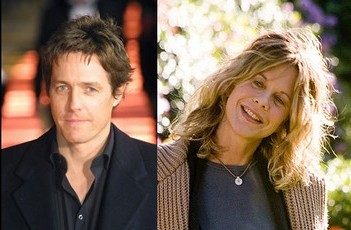
Consider most any romantic comedy you’ve ever seen. The lead actor, probably Hugh Grant, plays some “regular guy” on his way to do “regular guy stuff”, like go see his fiancĂ©e give a lecture at a book store. (She’s probably played by Julia Roberts). And as he walks down some New York City street being absentminded, goofy and charming all at once in his special way, he arrives at the corner only to see a suitably adorable woman (probably Meg Ryan) sitting at a table on the restaurant’s patio. Hugh, not yet seen by Meg, of course immediately sits down at a table near by and cleverly covers his face with his upside-down menu so he can watch her sip wine and write letters. (And of course he’ll soon regret it when her boyfriend, probably Jude Law, startles him and Hugh spills red wine all over his shirt.)


Did or Didn’t Hugh act knowingly here, and did he ‘deliberate’? Let’s go over Aristotle’s checklist:
1) Who was acting? Hugh is not yet insane so he is well aware that he is acting and in relation to a pretty lady.
2) He has no apparent tools but perhaps his boyish charm, affable manner and British accent.
3) The action is for getting near the pretty lady and perhaps meeting her.
4) It is done sheepishly, even boyishly, of course.
He meets the criteria so he is definitely not acting in ignorance, he is acting knowingly. And he’s not under coercion – humans don’t go into heat. And clearly it depends on him. So he has acted voluntarily. You may want to say that he still might have deliberated on the issue, but then you’re just being difficult. We’ve all been in situations where we acted all of a sudden. We suddenly want pizza, or to go to the book store, or to walk down this street instead of that one. Its really stretching the notion of “deliberation”, but its not at all stretching the idea of “knowing” what you’re doing.
Next time we’ll try to decide whether Hugh was a bad person by discussing impulsiveness, weakness, and finalizing our discussion of knowing what you are doing.

Saturday, April 17, 2010

Wrapping up Plato

Think for a moment about what it might be like to be a baby. Sure you’re adorable but most of your few waking hours you lay drooling, with blurry vision, no understanding of object permanence, unable to remember or recognize much of anything or any one besides mom and dad. How do we get from that to where you are today (which hopefully does not involve you needing to wipe your chin and be burped)?

Well, babies don’t seem to have a lot going on with their minds but they do have bodies. And Plato realized that the most basic thing about a body, any kind of body, is that bodies are the type of thing into and out of which things flow. Sure enough, this describes babies pretty accurately.

Well, how can something that is constantly leaking and being invaded possibly keep intact, much less grow and thrive? The short answer is sense perception. A living body is going to have to have the capacity to monitor what’s going in and out of it to some extent, even if it can’t immediately do anything with the info. This insight makes Plato say that in a way, sense perception flowers out of the “forceful disturbances” of the outside world.

While sense perception is essential to a living body such as a baby surviving, social animals such as humans are going to need more built-in capacities to survive and thrive. Plato thinks social animals would have to have built in the ability to feel pleasure and pain and the capacity to love. The first two probably make total sense, but what about the third? Why does Plato think social animals like us need to be born with the capacity to love? Well, it’s pretty tough to think of a society, even if it’s a wolf pack, where the members don’t have a strong bond with each other. And assuming that wolves can’t get to know each other’s interests and become friends and partners that way, then they must be bonded to each other some other way. So the idea is that societies form from a natural, instinctual kinship. If Plato were alive today he’d say it’s in our genes.

On Plato’s theory, we start out as these leaky bodies with the tools to sense perceive, to feel pleasure and pain, and to love. But he didn’t say the tools are automatically used or used well. Still, based on these we also soon come to have fear, “spiritedness” (a ‘fire inside’ sort of like pride) and “whatever goes along with having those emotions” and their opposites. What gets us to make use of all these capacities are forceful disturbances” of our bodies.(An aside I discuss elsewhere: the fact that the basis of mental life, of intelligence, is the physical reality of our bodies, the needs we are born with because we have bodies, is the real problem undermining AI research).

Now remember we talked about their being a brain psyche (mind) and a body psyche (emotions + appetites). As babies, our body psyche is clearly way more advanced than our brain psyche, and more specifically, our appetites are running the show. But we have the emotions right there too. As the outside world makes its presence felt and our appetites assert themselves on us, we begin to use the basic tools we just mentioned. Imagine being a baby again. You’re pretty well clueless as to what’s going on around you but when you want something you are agitated, you want it now. It hurts a lot not to have it and it feels great to get it. As Plato says, the appetites are a beast whose sustainment cannot be avoided “if a mortal race were ever to be”.

But it seems wrong to say you spend all your time awake afraid, it doesn’t seem as if babies flail around all day terrified of things so much as it seems they are just waiting for (and occasionally looking for) stimulus. When the stimulus comes, it is either pleasing or not. If it is pleasing they want more until it loses its luster, and when it is painful they want it to stop immediately. And in each case the body has ready at hand responses, clumsy as they may be. Over time, just like any dog or chimp, it will learn to be afraid, or to be hostile, or to care about different things.

To get along much farther than dogs or chimps though, junior is going to have to develop her brain psyche to master its emotional states. To the extent to which she can do this, Plato says, her life will be just and she’ll gain the reward of a “life of happiness”. If the emotions master the psyche, though, or if the appetites go unchecked, look out.

Speaking of the appetites (whatever a body, given its nature, feels a need for): Plato thinks it’s quite important that for anything with powerful appetites there’s immediately a clash between those appetites and the outside world, which is totally indifferent to them. This is the original version of what for humans will become the main moral issue of the rest of their lives: the tension between what you want and your realizations that other people want the same for themselves, and that the world is indifferent to any desires at all.

Let’s review what Plato has said so far. At the core of what we are as bodies imbued with minds, what starts our mental lives and mental development, is the physical ‘violence’ done in and upon our bodies - and so our minds. Our brain psyche is going to have to work with our body psyche and more specifically, our emotion-psyche in our lifelong struggle with the “mighty river” of desires coursing through our body. At first the brain psyche is pretty much just going to get tossed around by the current and we’re going to suffer everything from blurred vision, to clumsy grips, to bladder control issues, to constant crying. And when our bodies collide with the outside world, well, that’s going to be a whole other set of problems.

However, we have built in the mental capabilities to have reasonably effective “baseline responses” to our internal needs and to external impositions, (even if at first they don’t amount to much more than crying and flinching). Over time these responses are honed and changed as our bodies, piloted by our body psyche, have more experiences and develop more coordination. But you need to realize how important this observation by Plato is: this means that our bodies are conduits of information – for themselves and for the brain psyche. The body psyche is replete with information about our changing internal physical states, whether they are caused by other internal events or by external events flowing through us and out of us. All of it registers with us even if we aren’t conscious of it or cognizant of it and the body is capable of acting on some info while ignoring other info. (Its really a kind of judgement, an idea I'll be talking a lot about towards the end of this project.)

Eventually, the appetites’ initially overwhelming force gets mitigated, and as time progresses, the rational or cognitive mind establishes itself more and more, to a degree such that like a successfully adapted animal, the growing person can more and more control its body and get what it wants out of its surroundings. The brain psyche becomes more and more “intelligent”, more and more capable of applying the concepts of sameness and difference, without mastery of which there no judgement and so no deliberate action. We’ll return to Plato and the tripartite soul at the end, but for now we have enough to move on and watch the basic Platonic psychology develop and evolve in the capable hands of Aristotle.

Wednesday, March 10, 2010

Moving on from Homer


Recapping up the discussion of Iladic people
Let’s recap on what the mental lives of the Iladic people were like. These people didn’t distinguish well at all between ‘thinking’ and ‘emoting’, and used the concept of the physical ‘thymos’ to characterize both. The thymos, you’ll recall, did the things we now take to be done by the brain and CNS; it was effectively the ‘mind’ and its various functions, and was literally thought to be a mixture of breath and blood located in the lungs (phrenes).
We also saw that based on this understanding of mind, Onians explained that learning was as literally “taking into the mind” and forgetting was literally “letting escape”. In addition, the state of a person’s thymos was thought to determine the “fierceness, energy and courage of a person” and the emotions were physical events or things that “enter into” the thymos as a liquid enters a cup.
Finally, let’s recall that we said that for Iladic people, perception or cognition was automatically associated with an emotion, and immediately followed by some degree of a tendency to action. By contrast, we today, and even Greeks of the classical era, exhibit the ability to seemingly “think in cold blood”. We’ve attained more discrimination about what’s going on in our minds, we’ve identified and defined various aspects and phases of mental activity rather than understanding mental activity as all of a piece.
To our credit, over the centuries we’ve managed to use language and abstract thinking, as well as philosophical and scientific examination, to slice and dice what our bodies do when we think and emote, and we’ve clearly become “outwardly more restrained” and even “inwardly calmer” in our actions than the Iladics are represented to have been. Much of this is to the good. Yet at the core of our advancement was a turning away from the core premise that all human mental life is physically based.
Quite some time ago we began forgetting, ignoring, or rejecting the basic starting point that emotions and thinking were coming from the same place, and in our efforts to locate more exactly what was the source of our mental lives, we made emoting and thinking functions of different parts of our anatomy, while at the same time coming to think of these different parts of our anatomy as fundamentally different. And even though most people today working on issues in and around cognition do accept that all thinking and emotional activity is physically based, you may be surprised to find out that old biases have calcified and we’re left with a big mess. At the core of the mess, as Joan Wynn Reeves put it, is the typical modern psychological view that there are “sharp distinctions between thought and feeling”.
More on that in the future, now let’s meet Plato.
Plato, or The Source
My argument is that if you look at Plato, Aristotle and Lucretius with a charitable, reasonable eye to what they were trying to address in psychology with the information on physiology they had, we can uncover a conception of mind and emotion that rivals any we have available today. This “P-A-L” account shows us that while a visceral view such as that of the Iladic people is useful, strict adherence to such a view is simply not robust enough. The account also provides a foundation on which to build a theory robust enough to handle the actual complexity of the relationships between mind, thought, emotion and morality. Unfortunately, it wasn’t long after Plato and Aristotle that theories about the emotions started off on two quite debilitating forks from this promising path.
I spent much of my discussion of Homer and the Iladic people focusing on thymos because that is overwhelmingly the concept their psychology depends on. However, there were other concepts and terms used for ‘mind’. The most recognizable of them is ‘psyche’, which you’ll recognize as the root of the English word ‘psychology’. In Homer, by and large it refers to “life-soul”, usually identified with spinal fluid or seminal fluid, which the ancients though literally gave life to a being. Through the ages between Homer and Plato the concept of thymos evolved and changed and distinctions were made that moved the “psyche” from this sort of spinal-seminal fluid to the immortal soul and the “seat of rationality”. For example, the poet Pindar (or II) is said to have developed the meaning of psyche into something “divine” and in some sense “concerned in the feelings of ordinary waking life” but at the same time “asleep when the limbs are active”. Plato, while he accepts the basic Iladic position that thinking and emotions come from the same physical system, significantly develops all of these concepts.
One thing I want to point out that is consistently overlooked is that Plato thinks the physicality of cognition is invaluable. People point to his theology (II) and metaphysics and overstate Plato’s wish for dissolution of the bonds between mind and body. As far as his psychology is concerned, it’s simply not important. We’ll see that what is crucially important is his creation of the conceptual space, the theoretical framework, for excluding some mental activity, sometimes, from the intrusive, inevitable and even overwhelming forces acting in and on the human body.
The Basics on Plato’s Adjustments
Plato starts from the view that in early childhood development (II), we are all like the Iladic people: everything takes a back seat to our immediate desires and our actions are based on the immediate information we have available. Our body is the conduit of information about both internal physical states (e.g. grumbling stomach, pain in leg) and external events that cause changes in our internal physical states (e.g. being hit by an object, a parent’s voice). Our responses to these states are limited to hardwired reactions. We slowly move beyond inborn or built-in responses to these states up to basic intelligence through experience and increasing body control.
Plato notes that we only perceive a limited amount of the information given us; some thing, some mechanism, filters the constant flow of stimuli. Its hard to overstate the importance of this move by Plato. It allows for a psychology that can distinguish between the center of registration and the center of perception. The center of registration is effectively the living body of any being and the center of perception, of consciousness, is a living body with a working psyche. The center of registration is the more basic system, it underlies all thinking and self consciousness.
After making this crucial move, Plato realized that if we could determine how the living body of a being registers stimuli, it would go a long way in understanding how the more intelligent system, the perceptive consciousness of a human, works, because they are causally connected. As I’ll highlight as we go along, this realization by Plato is of the utmost importance and the failure of later thinkers to make it is the cause of many problems for later theories of the emotions.
I’ll wrap it up for this post by noting that we only get more abstract thinking ability if we are properly educated. But once we begin learning to use abstract concepts we begin to develop judgment and our actions go from being more or less predictable or determined reactions, like an animal’s, to being actually willful (chosen, intended) acts.