Showing posts with label actions. Show all posts

Thursday, January 19, 2012

Whew! The last word on the Second Error!

Last time I finished up by saying that because of his interests and assumptions, Descartes was unable to reach the conclusion he wanted, that emotions are purely mental, and that he looked to be forced into one of two other conclusions: 1) that emotions can exist without mental content, or that emotions can exist without the soul; or 2) that his theory contradicts his assumptions because it's actually lends itself fairly well to defending the idea that emotions must be a type of thought and must have a physiological basis. 

Let's have one last closer look. At the very beginning of his book (A1) he explains emotions are "passive events" that happen to the person/soul, but are specifically referring to the person who they happen to. This fits well with his theory of how perception of things like pictures works. However, he also determined that what emotions are made from and how they are made is completely explainable by mechanistic physiology! To put it super-briefly, though he fixes the "home" of emotions in the soul, it is the body and memory that do nearly all, possibly even all, the work of supplying the mental/belief content necessary to start the physical processes that are emotional actions and reactions. This is actually pretty brilliant, but it was a disaster for his beliefs. So he had to find a way out, a way to show that emotions are perfomances of the mind and could not possibly be performances of the body. 

To flesh it out a little more, lets look at how fear would work (A38): he explains that the movements of the body that "accompany" the emotions do not depend on the soul, all that is required to put a passion in the soul is the proper course of certain chemicals towards the nerves in the heart. From there they can then strike the nerves that make the legs move - and sustain the action - which automatically causes movements in the pineal gland, which causes the soul to "feel and perceive" that we are fleeing from danger. This process can be started by a learned response (as a child you saw a bear eat your dog, now you see a bear and you run), or by "dispositions of the organs" (think reflexes or innate behaviors (flinching when you believe you see a snake, even if its a stick). That is, in a word, bodily volition. 

Descartes goes on to explain (A40) that the emotions mainly incite and dispose the soul to will things for which the passions already are preparing the body. To me, that sounds like a rubber stamp, not an instigator.

Perhaps worse, this sort of explanation leads to a very hard question - in what sense is fear a mental object? How is it cognition, the thing that only the soul/mind can do? Consider - don't animals "fear"? If they do, and they don't have souls/minds, how is that possible? (Descartes would say they don' t have souls and don't fear). But beyond that, we've seen that in some cases the body can start and sustain an emotion, like fear, without any direct influence of the soul. So whatever mental content they have is included in them by means other than the soul!

Remember, on Descartes' view, the body is supposed to have absolutely no part in cognition, yet the first two Cartesian errors have already exposed that instead, he's nearly made the mind/soul impotent or redundant, a position that we'll see later fits easily with Sentimentalism in ethics.

While Descartes is making these points, he also tries to tie on a couple of saving moves: 1) He argues that the pineal gland is really where emotions are felt, even though they feel like they are happening in our body (A33-34), and 2) he argues that the only use of the emotions is to inspire volition/will in the soul (A52). If these two things were right, he'd be making a decent case that the emotions provide the initial motivation for volitions, create them and sustain them. BUT at the same time he is denying #2, saying that the emotions incite a "will for" doing actions they already prepare the body to do, and #1 is very hard to believe (much less prove). 

To conclude, bodily voliton exists: In at least some cases the body is already performing and doing what needs to be done in emotion-situations, as well as in day-to-day actions, just from an image in the brain ("bear") + either learned responses or human nature, and though he wants it to be that the souls is ultimately the "decider", it really seems to be a lot less involved than that. Descartes' theory has two arguments smashing into eachother - one explaining how the emotions are of the body, and the soul is irrelevant, and another concurrently arguing that the body is merely the substratum on which the emotions of the soul perform.

Monday, October 4, 2010

Wrapping up Aristotle: On the Emotions and Akrasia

The Problem of Akrasia

We’ve been discussing Aristotle’s take on lack of self control, explaining that there were two types: weakness of will and impulsiveness. I discussed how these two types of character led to a deeper understanding of the emotions. Now we want to take this knowledge and see if we can use this knowledge to work towards our goals of showing that good and bad are more than just relativistic, arbitrary concepts, and that ethics has a real job to do.

The ancient Greeks had a term for being unable to control yourself, for going against your better judgment: akrasia. I’ve discussed this earlier, but I’ll restate it here without making an obvious argument, as a sort of signpost to where we are going: judgement should not be thought of only in terms of the sort of thinking you do when doing algebra problems. Judgement of a kind is going on all the time inside you, even if you aren’t aware of it.

With that said, lets put it aside for a moment and focus on finishing up with Aristotle.

Akrasia is a very important concept in ethics for the simple reason that it’s hard to explain why it should happen. If we know what’s right and wrong, if we can think and understand that we should or should not do a particular thing, why then do we still sometimes do bad things? If you have an ethical theory that insists morality and moral behavior are at least sometimes products of human cognitive ability, that is if you believe that you use your brain to consider right and wrong, good and bad, you’d better have a good explanation for why thinking people don’t do what they know is good all the time. Otherwise it might be easier to think that what we think has nothing much to do with what we do.

You and I both know we do not do what is good all the time, so we need an explanation. And it can’t be some sort of self-serving or question-begging claim everyone knows is wrong but that will “save” your theory from being obviously weak. A good theory will account for such problems legitimately, or you might say ‘organically’ in that it ‘grows’ out of’ the structure.

So in this installment we’re going to see how the innovations we saw last time from Aristotle will help solve the problem of akrasia. More specifically, we want to uncover if and to what extent emotions contribute to or explain akrasia. We’re asking Aristotle to tell us whether emotionally excited people who do bad things are acting voluntarily, involuntarily, or some mix of the two.

Well, first off Aristotle notes that common sense and experience tell us sometimes people really do deliberate and fail to stick to the results of the deliberation because of their emotional condition. (Later down the road we’ll discuss the ‘how’). Second, he notes that sometimes people see this possibility coming and ‘wake’ themselves, regaining control of themselves before it is too late and they get overcome. Because both of these things are true, common sense tells us that some things done through the emotions are not done knowingly and so they are involuntary. Let’s think of a couple of examples.

Consider the difference between an enraged soldier in battle and an wealthy executive being insulted by his spouse or lover at a country club cocktail party. You might argue that the soldier’s and the executive’s responses are “voluntary”, but they have important differences.

Emotions and Akrasia

The ethical issue is that some emotions are inevitably, strongly going to be experienced given a certain context. So we need to understand how reasonable it is to expect a moderation of the emotion or at the least keeping a good handle on behavior in such situations is. In some cases emotional action will violate one of the three standards for an act being voluntary (not in ignorance of relevant factors, unforced, the result of deliberation), and so in those cases, the action should be considered counter voluntary. After all, how could a soldier expect to survive if he isn’t reacting to the seriousness of a life and death struggle? Similarly, how could the businessman keep his reputation if he responds inappropriately to his wife? If he hits her he’s obviously gone beyond acceptable behavior, but if he is made to look ineffectual he’s in bad shape too.

Whatever sort of thinking and judging is going on in cases where you are overcome by emotion, it sure seems to common sense to be “less” than the sort of conscious deliberation you might go through as you’re diligently crafting your cover letter for a new job application, the sort of thing I’ve called the conscious deliberation of a reasoning agent.

So to that extent you might be inclined to say that motional actions sometimes do not involve planning ahead and accepting the consequences of your possible actions. In some cases at least, the spirit of calling something “voluntary” is violated even if the term somewhat loosely applies. But how do we distinguish those cases?

Aristotle and Plato both say that behaving uncontrolled with respect to the emotions is actually in a way giving in to reason – it is “intelligent” behavior, even if inappropriate or just plain wrong. The idea is that temper is rational in that it is open to the dictates of reason in a way the appetites aren’t: cognition is going on even if reflection isn’t.

As Aristotle puts it, temper relative to reason is like a hasty servant to its master, or a dog barking at someone approaching the home. The hasty servant runs out of the room before hearing everything said and then fails to carry out the instruction. And the dog is on alert even before it knows whether the visitor is a friend. Both reason and sensory appearance can cause an emotion and temper is not only a quality of the act, it is a source of it, it’s a feeling and a mental event.

Thinking back to the anger situations of the soldier and the businessman, in such circumstances either reason or appearance (or both) will indicate something like “unprovoked aggression” or “insult” and temper, as if having reasoned out this sort of thing is a good cause for “going to war”, moves immediately into hostile mode. So this “incomplete thinking” is in a way temper following reason.

On the other hand, in a case of too much appetite, (the ‘kid in the candy store’), all appetite needs is for perception to say “pleasant” and you hatch a plan to get enjoyment even though you just ate. While appetite drives you immediately to seek gratification for the sake of gratification, a person who loses their temper, while open to reason, doesn’t always exactly “plot” the satisfaction of temper. It’s in the service of reason, misunderstood.

Aristotle’s Answers

The “separation” we see in a weak person’s action is often missing in the behavior of the intemperate one. While the intemperate person is wholly in the moment, the weak one is fully aware and methodical in their choice. When you get down to it, what Aristotle says about the emotions is that some emotions really are counter-voluntary. This means that his ethical theory and others like it has good reason to assume that some emotional acts are counter-voluntary. Therefore there’s a big moral difference in doing something wrong based on an emotion that is fundamentally counter-voluntary. And as we’ve noted, in some cases its just going to be the case you will experience a counter voluntary emotion.

Now if you act from an anger of such violence that you “see red”, you don’t know what you are doing. And if you are incapable of knowing what you are doing, but later regret what you did, then clearly you acted counter-voluntarily. (If you didn’t regret it, then it sure seems like the outcome matches what you would have willed.) What can we do with that?

Aristotle defines the emotions as “all those feelings that so change men as to affect their judgment and that are also attended by pain or pleasure”. This cognitive (thinking-centered) definition allows a three-step process by which to examine emotions and understand their impact. And it should give us some insight into how we can develop a strong understanding of right and wrong. He asks us to ask:

1. What is the state of mind of the (e.g., Angry) person?
2. Who do we usually get (angry) with?
3. On what grounds do we get (angry) with them?

Answering these questions gives Aristotle this definition of anger: an “impulse accompanied by pain, to a conspicuous revenge for a conspicuous slight directed without justification toward what concerns oneself and one’s friends.” But how does it help us understand right and wrong?

First, thinking seriously about people you are dealing with or observing in this manner will train you to be a better judge of character, temperament, motive and tendencies. Second, I believe it tells us that what’s notable about the emotions is how powerful their felt experience is bound to be on certain occasions, and how this is still intimately tied to our cognitive abilities. Third, it helps us understand that akrasia, which might on the surface look like people choosing to do what they know will hurt them, is at least in the cases of certain emotions, not that at all. In the case of being enraged it’s a quick solution to what appears to be a life and death threat – whether, as in the case of the soldier the potential for physical death, or in the case of the businessman, the potential for social or societal “death”.

It is up to those of us who really care about right and wrong to fairly understand what type of person we are dealing with, what type of context they are in, and what the likelihood is that their emotional response is controllable before we determine whether they acted good or bad, and how to punish them if necessary.

There’s still a lot more to be said on right and wrong, but for now we’re done with Aristotle. Next time we’ll begin on Lucretius’ discussion of mind, which develops what Plato and Aristotle started in a highly scientific manner and will allow us some more insight into how to make the judgments we need to make to both be good and to know good.

Thursday, May 13, 2010

Voluntary and Counter Voluntary Action

In previous posts we noted that most animals’ behavior is pretty well circumscribed by their natural instincts and limited intelligence; they don’t have true agency, by which I mean two things: 2) the ability to choose and 2) moral agency. That’s why they can’t be held morally culpable for what they do, even if we disapprove or disallow it. (I have zero interest here in discussing whether or not free will exists, I unrepentantly assume it does).

No one ever jailed a tiger for killing to eat, but we certainly do kill man-eating tigers if we can. In both cases, it boils down to the same thing; tigers are remorseless killing machines. Even if individual tigers can be trained to be relatively peaceful and can show affection, they do not show any evidence that they can or would reject their natural instincts.

You might be saying, ‘well of course, they are wild animals! What do you think you’ve shown?’ Well I’ll admit its an easy case, but really, squirrels, toads, and all manner of creatures great and small are in the same boat and we don’t think of them as ‘wild’. But I suppose what you want to point out is that some animals, such as dolphins, dogs, pigs and great apes seem to be different; they are way smarter and highly social. And that combination must count for something in the rankings. Those are interesting examples and no doubt interesting cases can be made that these animals sometimes seem to exhibit moral agency. But for now I’m going to say that the only real candidates here are dogs and maybe dolphins (sorry to Babe, Porky and Wilbur) and table it – but I promise to say a bit more about that a few posts down the road.

So, what I’m saying is outside of a very few possible exceptions, human beings are unique in being true agents. And even then I qualify that by acknowledging that many of often don’t follow through on our ability to make choices. This all brings me to the million-dollar question – when do we judge humans to be good or bad, when do we judge behavior to be right or wrong? Do you see the issue? If we don’t blame a tiger for being a killer, and we don’t (rightfully) blame a dog for barking, because they can’t really choose, then why do we blame humans for negative consequences from actions they didn’t choose to do?

Well we certainly do, but we also do make distinctions such as between murder and involuntary manslaughter. We punish both, the former much more severely than the latter. And that’s because of the difference between voluntary and involuntary action.

Human beings have will or agency, we can knowingly do things, we can choose to do otherwise. How we do, and why we sometimes don’t is at the core of ethics. So lets dig into the difference between voluntary and counter-voluntary action.

I didn’t mean to do that!?!

Either you meant to do something or you didn’t, right? You probably think that, but then you probably also kind of believe in the point behind the “Freudian slip”; there are no accidents.

Well Aristotle did believe there are some accidents. In fact he thought that it was of the utmost importance to carefully study what it means to say actions are voluntary or counter-voluntary. And a major reason why is because what a mess the emotions can make of our distinction. After all, we say things like ‘fit of rage’, ‘consumed by jealousy’ and ‘blinded by love’. But does that mean the emotions make us animalistic? I agree with Aristotle that the answer to that is ‘Hardly! Some emotional actions are voluntary and some are involuntary because 1) some are controllable and should be controlled, 2) some are controllable and shouldn’t be so controlled, and 3) others cannot be controlled!’ So let’s get to understanding what’s going on.

A couple of definitions 


Keep in mind that in philosophy we are really fanatical about definitions, and as a result consensus can be very hard to come by,  but the process is very important to both deeper understanding of related issues and they are a key component in a successful argument. As a result, philosophical definitions are tightly packed and need to be unpacked. Let’s look at the definition for a Voluntary Action to see what I mean.

A Voluntary Action is an action that depends on you, that you do knowingly, and not under coercion. Remember that in the last post we argued that humans have the singular talent of being able to deliberate. We can think ahead about how to achieve specific goals, and that’s what makes us human. Well, what that means is that if you deliberate on a particular out come, you understand the relevant contextual factors, and are not forced to act in any way, what you do is a voluntary act.

Aristotle lists four relevant contextual factors and if you meet the criteria in a specific situation, then you in fact know what is happening. If you miss any of the four you don’t really know what is happening.

1) Who is acting, in relation to what, or affecting what?

2) With what are they acting? (e.g. a scalpel or a sword?)

3) What is the action for? (e.g. to save a life, to obtain someone’s money)

4) How is it done? (gently, vigorously, etc)

For example, say last Sunday you remembered it was Mother’s Day, you love your mom, she is alive, you believe that she did a pretty okay job raising you, you get along well enough, you both have phones you can use, and your dad wasn’t holding a gun to your head. If you picked up your phone and called her to tell her how much you love and appreciate her, and succeeded in doing so, making her feel all the sleepless nights were worth it, then you did so voluntarily. You were the actor, you used a phone, you did it to make your mom feel loved, and you did it with affection. Blam. Voluntary action on your part.

Of course, the flip side is counter-voluntary action: Anything you do that doesn’t depend on you, that you do in ignorance, or under force, is counter-voluntary. So for example, you are growing older (and wiser) every day, but it’s not quite right to say you are ignorant of it or being ‘forced to’ do so. Instead we say it doesn’t depend on you, it just happens that way.
Now here’s the reason we made it a point early to understand that humans can deliberate even if we don’t always do so. It turns out to be a pretty important issue: because of it, our definition actually allows for two types of voluntary action. There are voluntary actions that you did deliberate about and voluntary actions you did not deliberate about. (And that means, among other things, that just because you did something on a whim doesn’t mean its not your fault or that you didn’t mean to.)

Putting it all together, what we’re saying is that some voluntary actions are deliberated beforehand while others are not, instead they are performed without having decided to do them. (Remember that deliberation is a sort of calculating backwards from a stated goal all the way back to your conscious agency that leads to a decision on what action to take in order to set the sequence leading to your goal in motion, and it can happen quite quickly.)

Concluding with an example
 

It might be surprising and it may even sound wrong, but we’re going to argue pretty consistently and aggressively that you can in fact do something knowingly but without prior deliberation. To Aristotle’s mind, while a truly virtuous person (like grandma, maybe) always discriminates correctly, most of us fail in our discrimination, the implementation of our discrimination, or at both. The main way we do this is to act in possession of our faculties yet hurriedly such that we don’t think through the consequences – and regretting them when they happen. We meet all four criteria but we didn’t think through to our goal in advance.

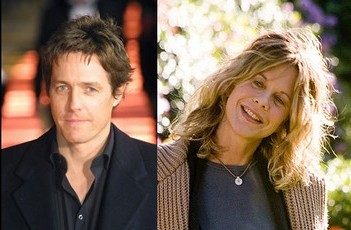
Consider most any romantic comedy you’ve ever seen. The lead actor, probably Hugh Grant, plays some “regular guy” on his way to do “regular guy stuff”, like go see his fiancĂ©e give a lecture at a book store. (She’s probably played by Julia Roberts). And as he walks down some New York City street being absentminded, goofy and charming all at once in his special way, he arrives at the corner only to see a suitably adorable woman (probably Meg Ryan) sitting at a table on the restaurant’s patio. Hugh, not yet seen by Meg, of course immediately sits down at a table near by and cleverly covers his face with his upside-down menu so he can watch her sip wine and write letters. (And of course he’ll soon regret it when her boyfriend, probably Jude Law, startles him and Hugh spills red wine all over his shirt.)


Did or Didn’t Hugh act knowingly here, and did he ‘deliberate’? Let’s go over Aristotle’s checklist:
1) Who was acting? Hugh is not yet insane so he is well aware that he is acting and in relation to a pretty lady.
2) He has no apparent tools but perhaps his boyish charm, affable manner and British accent.
3) The action is for getting near the pretty lady and perhaps meeting her.
4) It is done sheepishly, even boyishly, of course.
He meets the criteria so he is definitely not acting in ignorance, he is acting knowingly. And he’s not under coercion – humans don’t go into heat. And clearly it depends on him. So he has acted voluntarily. You may want to say that he still might have deliberated on the issue, but then you’re just being difficult. We’ve all been in situations where we acted all of a sudden. We suddenly want pizza, or to go to the book store, or to walk down this street instead of that one. Its really stretching the notion of “deliberation”, but its not at all stretching the idea of “knowing” what you’re doing.
Next time we’ll try to decide whether Hugh was a bad person by discussing impulsiveness, weakness, and finalizing our discussion of knowing what you are doing.

Sunday, December 13, 2009

Welcome to My Blog


This blog is dedicated to making use of my PhD dissertation in philosophy, "Anger Et Cetera: Understanding the Emotions in Ethics". I defended it on 13 May, 2009 and have spent the time since then contemplating what to do with my research. I considered trying to get it published as-is, but its not highly likely, nor is it very useful to anyone. People rarely read academic texts.

Instead I want to 'translate' it from 'academese' into plain English. I hope this will allow all the thinking and research I put into my dissertation to be of use to society. If it goes well, I think I'll turn it into a book that I could shop to a mass-market publisher.

I envision my material provoking you into thinking about the emotions; what they are, how they work, how they work to create what you consider right and wrong, how they affect your decisions and actions. But most importantly, I want to show you how we can use the emotions to move beyond the pernicious pull of moral relativism and defend a moral realism. For those of you who don't know, moral realism is at bottom the belief that some moral claims are actually true for everyone.

I hope that if you do get provoked, you'll do me the courtesy of sharing your thoughts in the comments area.

I expect comments to be courteous to me and any other commenters. I reserve the right to deny or delete any comments for any reason. And I reserve my copyright to all that I publish here. Any photos, video or artwork that I publish I assume to be freely available and will take down if the owner requests.

Thanks for checking out my blog,

Damien