Showing posts with label Moral Agency. Show all posts

Monday, March 7, 2011

What Everyone Ought to Know about Stoic Thought on the Emotions pt IV of IV

Was I being too hard on the Stoics?
I have strongly criticized the Stoics, concluding that their assumptions about the fundamental difference between the mind and the body, coupled with the insistence that you really must choose to ignore anything most people would say is ‘bad’ lead to impossible recommendations for how to act among people. You might think I’ve been too harsh, but I saved the best for last.
At §20 Epictetus makes the utterly stoic claim that “foul word or blows” are only an outrage because you judge them to be. §29 makes sure you get the point is serious, warning the would-be stoic that there are real costs to choosing the stoic life: grueling hours, you will have to “abandon your own people” and suffer the social humiliation of being looked down on by slaves and “ridiculed by those who meet you”. In fact, according to Epictetus, a true stoic gets the worst of every type of social good such as honors and offices, and even justice. And the reward for losing out on everything social is “peace of mindfreedom and tranquility”. So they shouldn’t care in any way about social norms or insults etc and they shouldn’t ditch their ‘stained’ friends.
So you see the Stoic position is simply a lost cause when it comes to the emotions and socialization. The two go hand in hand. And as we’ll see below the ad hoc revisions later Stoics make are nice only in the context of their assumptions and are intellectually spurious when viewed from outside the theory.
Theoretical & methodological problems
So I’ve made a lot of hay by attacking the core Stoic idea that emotions are judgments, and by pointing out how difficult it is to hold on to other key Stoic principles while still trying to account for proper socialization. But in fact, it seems even the early Stoics were aware of the problem. They just didn’t do very much convincing theoretical work to address it.
Chrysippus, who I mentioned before, and the Roman Stoic Seneca, whom Dante, among others, thought very highly of, did try to patch up the Stoic issues with emotions. Sort of.
Chrysippus tried to change the view to the idea that each emotion involves two separate value judgments. The first that there is a good or bad at hand, and the second is that it is appropriate to react to it. What type of emotion you experience will be determined by whether the thing is thought to be good or bad. So, when you decide that someone smearing gunk on your shirt deserves punishment, you experience the emotion anger, even if you can’t or won’t actually act on it. Chrysippus thought that this showed that it’s the second judgment – that its appropriate to react – that is the very bad judgment. He does this, of course, because you tend to lose trust and interest when you argue that awful things such as your wife dying in childbirth, or genocide, aren’t “actually” bad. But this was the original Stoic position.
So since the Stoics started with the goal of convincing you emotions are bad – which they had to – they needsomething to be wrong about you being upset about the truly bad things that are happening to you. They separated the mind from the body in an irrevocable way by saying you can only control your mind and that you must control your mind. The orthodox Stoic view held that your emotions are functions of your reasoning power, your ability to figure out what to do in a given situation. To the extent the emotions look like bad thinking, they must be fixed. (And if the emotions had a physiological (body) component and were able to overcome your mind, well that’s just awful).
In philosophy we call changing your core theory for the sole purpose of saving it from a killer objection ad hoc reasoning. It’s considered very poor arguing and thinking to do so. If the new additions to the theory are true, or make the new theory true, that’s fine. But you shouldn’t go around trying to argue that your original theory was correct. And its very often the case that these theoretical refinements are simply made-up and have no supporting evidence, don’t fix the problem or are undone by other problems.
I think their ad hoc move fails and I’ll take a moment to explain why. First, let’s keep in mind that the Stoics lean heavily on the idea that human emotions are voluntary. Their best piece of evidence for that is that emotions are eradicable; they felt that because we can get rid of an emotion, this proves that emotions are by their nature voluntary.
Of course, this absolutely does not follow logically. Here’s an analogy: Imagine that for no reason that you had anything to do with you got selected as the winner of a prize. But you can get rid of the prize by refusing it or giving it away. Does that mean you chose to win it? It’s silly, but the Stoics need it to be true. So they insist it is.
Seneca

Plato, Seneca and Aristotle. I can understand why the artist made them look like twins.
Seneca, famous for his work on anger, gave a better argument for how Stoics should understand the emotions. He explained that the initial appearance (“first movements”) of anger or shocks of anger don’t have to lead to full anger because full emotion requires acts of assent and will. His idea is that since you can question appearances and not accept them, you don’t have to become angry. If it looks like someone is stealing your laptop you don’t automatically get angry, you can stop the process and see whether or not the person really is stealing it and then get angry for real or not. But if you let the initial ‘anger shock’ guide you to act out, it’s your own damn fault.
I kind of like this idea, but it’s far away from orthodox Stoicism. It seems to leave the possibility that some emotional action is justified. But it has the flaw of not realizing that in some cases this “initial” part of anger could be the difference between life and death. And it’s changing the concept of anger by somewhat arbitrarily cutting it up between the ‘initial’ shock and the rest of it; why isn’t the heat I feel in my chest when I’m bumped harshly on the subway steps ‘actually’ anger?
What I like best about Seneca’s kinda Stoic view is that it really comes close to agreement with P-A-L; that line of thinking says that time to reflect often enables us to halt our emotions too. But at the end of the day the Stoics want and need to say that emotions are voluntary judgments through and through if they really want to convince people that they can and should get rid of their emotions. But this “two-part judgment process” that equals one emotion isn’t very convincing – or practical.
Final thoughts on Stoicism
In the end, advocating that people lose all their sentiments, leave their family and give up any chance at a meaningful social life simply is absurd. It’s ridiculous to suppose that human beings ought to follow this plan in order to be happy. Humans, our minds and bodies, are social creatures. At the bottom, Stoics believe this, even if they overtly try to deny it. That’s why they are so inconsistent about whether social concepts such are reputation are truly good or bad. It’s as simple as realizing that if you really believe that when someone makes you angry it’s simply always “just you” who has angered yourself, you’ve created a hopeless situation. The extent to which stoic psychology denies that emotions exist at both hot and cold levels and that some emotions can and must be experienced and acted on, is the extent to which Stoicism is useless as an ethical theory.
In the next post I’ll discuss the rise of materialism and introduce you to the father of Modern Philosophy, René Descartes.
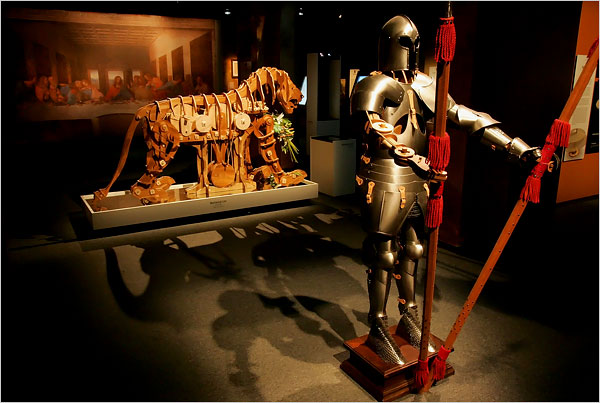
Materialist and Mechanistic philosophy created the modern world

Monday, February 7, 2011

How to Understand The Epicureans on Emotion, Part II of II

As I explained in the last post, Epicureans believe that we all have a fundamental desire to pursue pleasure, and that to fulfill this desire, we'll actually sometimes have to avoid some pleasures. Specifically, we need to avoid pain-creating pleasures (e.g. doing hard drugs) and even pursue pleasure-creating pains (e.g. taking awful-tasting medicine).

That's certainly a tough lesson for many to learn, but it has the ring of truth to it, and, at least in my case, experience says it's often true. Perhaps you're one of the lucky ones who think all this is rather obvious and that there's not much to see here. Either way, lets look a little deeper because there's plenty more to see.

Do we really ALWAYS act to avoid pain and fear / to get pleasure?

Taking the claim that we always act to seek pleasure / avoid pain at face value may seem at times brilliantly simply and at other times a cliché or an uninformative tautology.

Consider the following:

1. Pleasure is the avoidance of pain

2. All action is to avoid pain

3. If its true that when our desires are eliminated, we do not act, then when we eliminate pain, we do not act until there is another possibility of removing pain.

That is, it appears what we're agreeing to is that when we succeed in eliminating pain, we cease to have desires, and so we cease to have any reason to act, so we don't act.

Does that have the ring of truth or sound like a tautology? Hardly. Its actually a strange thing to consider. I mean, I can imagine you could argue that someone in a drunk stupor, high on drugs, having just achieved orgasm or having completed a delicious meal could be 'sated' in such a way as to have no desire to do anything.


Homer, having achieved the absence of pain, ceases to act

For a time. Specifically, until some other 'pain' interferes with our state of repose.  But then all we really seem to have learned is that we'll always be hungry and that the effort to satisfy certain hungers will pay off longer or better than others. But Plato and Aristotle already made that very clear.

So what in the world are we really saying in agreeing with the 'obvious' truths that pleasure is the absence of pain and all action is to avoid pain?

What's really happening here?

Ask yourself this - what actually happens when you, by luck or by careful planning, act in a way that truly maximizes your pleasure?

The first thing that occurs to me in asking myself that is that in such cases its highly likely that it involved a lot more than a stroke of luck, my brain - more or less consciously - was deeply involved. And the more such 'maximized pleasure' moments one has, the more likely it is that more than just luck was involved.

So the first thing I'd feel good about concluding is that some of the times that I really maximize my pleasure require a bit of thought. But I also have to accept that other times its more the case that I fell back on some training - which may have required thought in the past, but little now.

For example, the goal of having a tasty snack is a simple, good goal. It doesn't require a whole lot of thinking. But in fulfilling it you do have to have the implicit awareness that not everything that looks tasty is tasty.

So when reaching into the cookie jar for some Oreos, you might recall the time you accidentally got some nasty off-brand cookie and so double check what you pulled out this time. That would be 'goal awareness' plus 'realizing' or 'knowing' that looks can be deceiving.

The epicurean maxims we've been discussing can handle this. And actually, thats nice - in a way they are saying we can judge without deliberating. That's a good thing, and its in agreement with P-A-L. But there's going to be a few problems.

Let's quickly note that Plato, Aristotle, Lucretius and Epicurus all basically agree on some key points:

1. Every action is done for the sake of getting to some ultimate end. Depending on who you ask, that the ultimate goal could be said to be accumulating wealth, political power, sexual conquests, or perhaps a life of the mind.

2. But as far as the philosophers I noted above, they're all pretty much in agreement that the ultimate end isn't really any one of those things but rather happiness. A major caveat - each one of the philosophers mentioned has subtle and interesting differences in just what happinessis.

3. They do, however, stand in agreement that achieving happiness is mostly up to us and requires us to be virtuous. But that means that they also agree that being happy requires some level of control over our desires.

The issue, as I tried to make plain at the beginning of this project, is that its going to take a solid understanding of human psychology to determine  what makes humans happy in general, and what will make you happy.

Not a rhetorical question: Just how far does 'all action is for the avoidance of pain' go in that direction?

Identifying the Problems Epicureanism has with Emotion

Epicurus strikes out from this basic agreement with P-A-L do to his thoughts on how to deal with the fact that we sometimes choose to act in ways that do not give us what we seek, pleasure, but instead give us the opposite.

Epicurus thinks that when we act so that we end up in real pain, its caused by both chosen/conscious actions and by reflexive actions,including emotion-driven actions, even though we never intend for this to happen.

Remember, we always seek pleasure, we always act to get pleasure. When the emotions sometimes lead you to pain, they make you wrong about the outcome your actions will lead to.

That is, emotions cause you to think improperly, to be mistaken about the facts of the matter, and so to incorrectly choose what will bring you pleasure. Not only that, acting emotionally is sometimes choosing to act in ways that do not give us what we seek, but instead give us the opposite.

As such, emotions need to be eliminated. They're just too dangerous. And they, on the surface at least, contradict a major Epicurean tenet - that we always act to pursue pleasure.

Rhetorical question: Is happiness an emotion or isn't it?

Let's be clear - Epicurus thinks that when we fail to achieve pleasure, we chose to act for pleasure but were wrong about what we thought we'd achieve. After all, we to some extent  always chose to act.  Similarly, Epicurus also believes that even more or less unchosen acts that lead to real pain (not pleasure-creating pains) are the opposite of what we 'wanted' to achieve.

That is, whether or not we are acting in 'full choice', or acting 'instinctively' or 'reflexively', act that induce real pain are errors. And we definitely want to be conscious of what motivates our chosen actions, as this will help avoid future errors. So he counsels that we hone our abilities to control 'instinctual' or 'reflexive' acts taken to avoid pain.

But are we ever going to consistently get what we want - no pain or fear - by listening to Epicurus' advice that only the proper pursuit of necessary desires will ensure our desires are truly fulfilled?  That is, can we and should we act exclusively and correctly for the repose of the mind and body and nothing more? That's certainly the prescription.He encapsulates all this when he says “the pleasant life comes from searching out the motives for all choice and avoidance, and banishing mere opinions (like many emotions), to which are due the greatest disturbances of the spirit”.

Conclusion

Alright, I've been slow-playing my criticisms of Epicurus' take on the emotions and how they influence his moral philosophy but its time to play my hand.

The emotions are real trouble for Epicurus' theory for the simple reason that a person's success at understanding and controlling the emotions will determine how good an epicurean she will be.

Epicurus agrees with Plato and Aristotle that in some situations, certain emotions will prove exceedingly difficult to avoid. At its core Epicureanism is advising us that only a small subset of our desires - the natural and necessary - is at all necessary for and conducive to happiness. That's why Epicurus insists we understand the types of desires. Knowing what's what will allow you to act in a way so as to have and maintain a healthy body and a mind free of disturbance. And because of the fact unmodulated or ungoverned emotions can work powerfully against this goal, he wants to throw the baby out with the bathwater and eliminate emotions.

The problem for Epicureanism as a guiding moral philosophy, what leads it to this conclusion, stems from the fact that for most people who might try to be epicureans precious little of what we do is a result of conscious deliberation. And thus to make it work we're going to have to find some way to train ourselves to act appropriately in cases where we're not consciously considering the true nature of the desire we're dealing with. But how is this training supposed to work? How do you raise a child this way and how do you reverse-engineer it in a mature adult?

I'll remind you one last time that according to Epicureanism, young or old, educated or ignorant, we always act to achieve happiness or pleasure, to avoid pain or fear. But just what does that mean when we in fact do not often consciously think about our actions and what is really motivating our desires?

It means that we often get tricked. It means that in order for most of us to really be happy, somehow we must both consciously and non-consciously avoid errors in determining what is actually best for us, what we really need to do and what only seems necessary.  We need some mechanism or mechanisms to make sure we only pursue the absolutely necessary desires, no matter our level of conscious attention. Unfortunately, Epicurus refuses to accept what Plato, Aristole and Lucretius did - the emotions can be just such mechanisms.

In order for normal people like us to succeed as epicureans given our limitations in concentration, we need to be trained. This is not news, and in fact, as you no doubt have noticed society does do a lot of training through the mores it passes along. So does organized religion. For example, until quite recently, society trained homosexuals to repress their sexuality, at the cost of tremendous stress and unhappiness. Many religions still do.  And more positively, traditional sexual expectations for heterosexuals, though also stressful, perhapsworked to lower infidelity in marriage and by extention lowered the rate of divorce, arguably providing better homes for young children.

But how do such mores work? The way they are passed on, usually in childhood, makes it pretty clear they are not appealing to our rational faculty. We don't get logical or philosophical arguements for the rules of society or religion. Instead it seems clear that the emotions, including pride, fear, shame, anger and the need for love are deeply involved. Much more than involved.

In reality, we know it to be true from experience - it just makes sense - that properly calibrated emotional responses to situations are exactlythe efficient, practical, successful mechanisms by which we can increase the likelihood that we can have the well-trained character that would help us approach the goal of desiring only what is truly going to make us happy.

However, Epicureanism not only discourages this, it flatly claims that strong emotions are to be completely eliminated and generally speaking, all emotions should be eradicated. Even though Epicurus had the benefit of studying Aristotle's thinking on the matter which fleshes out convincingly the idea that in some cases its highly desireable,correct even, for you to strongly feel specific emotions.

As I think Plato, Aristotle and Lucretius made plain, and as I'll explain in greater detail later, the emotions are exactly the sort of thing to strongly influence you to act quickly and assertively to achieve a desire you're body thinks is necessary. Its unquestionable that to perform this service they need a significant level of monitoring. I argued that this insight is at the core of Plato's psychology. Epicurus, to his discredit, misses this point.

For him, the emotions are so powerful and damaging that they simply offer too much of a chance for error and so simply offer too much likelihood for pain. And the successful 'emotion-controller' would have to be already nearly perfect in character not to succumb to negative impulses. Thus Epicurus says we need to eliminate them.
But this is an unrealistic goal, and given the tremendous force for good education and action that the emotions in fact can be, its an unworthy goal.
The emotions are not a problem to be avoided, or a rough patch to be smoothed. They are an integral part of our organism that needs to be enhanced.


Monday, October 4, 2010

Wrapping up Aristotle: On the Emotions and Akrasia

The Problem of Akrasia

We’ve been discussing Aristotle’s take on lack of self control, explaining that there were two types: weakness of will and impulsiveness. I discussed how these two types of character led to a deeper understanding of the emotions. Now we want to take this knowledge and see if we can use this knowledge to work towards our goals of showing that good and bad are more than just relativistic, arbitrary concepts, and that ethics has a real job to do.

The ancient Greeks had a term for being unable to control yourself, for going against your better judgment: akrasia. I’ve discussed this earlier, but I’ll restate it here without making an obvious argument, as a sort of signpost to where we are going: judgement should not be thought of only in terms of the sort of thinking you do when doing algebra problems. Judgement of a kind is going on all the time inside you, even if you aren’t aware of it.

With that said, lets put it aside for a moment and focus on finishing up with Aristotle.

Akrasia is a very important concept in ethics for the simple reason that it’s hard to explain why it should happen. If we know what’s right and wrong, if we can think and understand that we should or should not do a particular thing, why then do we still sometimes do bad things? If you have an ethical theory that insists morality and moral behavior are at least sometimes products of human cognitive ability, that is if you believe that you use your brain to consider right and wrong, good and bad, you’d better have a good explanation for why thinking people don’t do what they know is good all the time. Otherwise it might be easier to think that what we think has nothing much to do with what we do.

You and I both know we do not do what is good all the time, so we need an explanation. And it can’t be some sort of self-serving or question-begging claim everyone knows is wrong but that will “save” your theory from being obviously weak. A good theory will account for such problems legitimately, or you might say ‘organically’ in that it ‘grows’ out of’ the structure.

So in this installment we’re going to see how the innovations we saw last time from Aristotle will help solve the problem of akrasia. More specifically, we want to uncover if and to what extent emotions contribute to or explain akrasia. We’re asking Aristotle to tell us whether emotionally excited people who do bad things are acting voluntarily, involuntarily, or some mix of the two.

Well, first off Aristotle notes that common sense and experience tell us sometimes people really do deliberate and fail to stick to the results of the deliberation because of their emotional condition. (Later down the road we’ll discuss the ‘how’). Second, he notes that sometimes people see this possibility coming and ‘wake’ themselves, regaining control of themselves before it is too late and they get overcome. Because both of these things are true, common sense tells us that some things done through the emotions are not done knowingly and so they are involuntary. Let’s think of a couple of examples.

Consider the difference between an enraged soldier in battle and an wealthy executive being insulted by his spouse or lover at a country club cocktail party. You might argue that the soldier’s and the executive’s responses are “voluntary”, but they have important differences.

Emotions and Akrasia

The ethical issue is that some emotions are inevitably, strongly going to be experienced given a certain context. So we need to understand how reasonable it is to expect a moderation of the emotion or at the least keeping a good handle on behavior in such situations is. In some cases emotional action will violate one of the three standards for an act being voluntary (not in ignorance of relevant factors, unforced, the result of deliberation), and so in those cases, the action should be considered counter voluntary. After all, how could a soldier expect to survive if he isn’t reacting to the seriousness of a life and death struggle? Similarly, how could the businessman keep his reputation if he responds inappropriately to his wife? If he hits her he’s obviously gone beyond acceptable behavior, but if he is made to look ineffectual he’s in bad shape too.

Whatever sort of thinking and judging is going on in cases where you are overcome by emotion, it sure seems to common sense to be “less” than the sort of conscious deliberation you might go through as you’re diligently crafting your cover letter for a new job application, the sort of thing I’ve called the conscious deliberation of a reasoning agent.

So to that extent you might be inclined to say that motional actions sometimes do not involve planning ahead and accepting the consequences of your possible actions. In some cases at least, the spirit of calling something “voluntary” is violated even if the term somewhat loosely applies. But how do we distinguish those cases?

Aristotle and Plato both say that behaving uncontrolled with respect to the emotions is actually in a way giving in to reason – it is “intelligent” behavior, even if inappropriate or just plain wrong. The idea is that temper is rational in that it is open to the dictates of reason in a way the appetites aren’t: cognition is going on even if reflection isn’t.

As Aristotle puts it, temper relative to reason is like a hasty servant to its master, or a dog barking at someone approaching the home. The hasty servant runs out of the room before hearing everything said and then fails to carry out the instruction. And the dog is on alert even before it knows whether the visitor is a friend. Both reason and sensory appearance can cause an emotion and temper is not only a quality of the act, it is a source of it, it’s a feeling and a mental event.

Thinking back to the anger situations of the soldier and the businessman, in such circumstances either reason or appearance (or both) will indicate something like “unprovoked aggression” or “insult” and temper, as if having reasoned out this sort of thing is a good cause for “going to war”, moves immediately into hostile mode. So this “incomplete thinking” is in a way temper following reason.

On the other hand, in a case of too much appetite, (the ‘kid in the candy store’), all appetite needs is for perception to say “pleasant” and you hatch a plan to get enjoyment even though you just ate. While appetite drives you immediately to seek gratification for the sake of gratification, a person who loses their temper, while open to reason, doesn’t always exactly “plot” the satisfaction of temper. It’s in the service of reason, misunderstood.

Aristotle’s Answers

The “separation” we see in a weak person’s action is often missing in the behavior of the intemperate one. While the intemperate person is wholly in the moment, the weak one is fully aware and methodical in their choice. When you get down to it, what Aristotle says about the emotions is that some emotions really are counter-voluntary. This means that his ethical theory and others like it has good reason to assume that some emotional acts are counter-voluntary. Therefore there’s a big moral difference in doing something wrong based on an emotion that is fundamentally counter-voluntary. And as we’ve noted, in some cases its just going to be the case you will experience a counter voluntary emotion.

Now if you act from an anger of such violence that you “see red”, you don’t know what you are doing. And if you are incapable of knowing what you are doing, but later regret what you did, then clearly you acted counter-voluntarily. (If you didn’t regret it, then it sure seems like the outcome matches what you would have willed.) What can we do with that?

Aristotle defines the emotions as “all those feelings that so change men as to affect their judgment and that are also attended by pain or pleasure”. This cognitive (thinking-centered) definition allows a three-step process by which to examine emotions and understand their impact. And it should give us some insight into how we can develop a strong understanding of right and wrong. He asks us to ask:

1. What is the state of mind of the (e.g., Angry) person?
2. Who do we usually get (angry) with?
3. On what grounds do we get (angry) with them?

Answering these questions gives Aristotle this definition of anger: an “impulse accompanied by pain, to a conspicuous revenge for a conspicuous slight directed without justification toward what concerns oneself and one’s friends.” But how does it help us understand right and wrong?

First, thinking seriously about people you are dealing with or observing in this manner will train you to be a better judge of character, temperament, motive and tendencies. Second, I believe it tells us that what’s notable about the emotions is how powerful their felt experience is bound to be on certain occasions, and how this is still intimately tied to our cognitive abilities. Third, it helps us understand that akrasia, which might on the surface look like people choosing to do what they know will hurt them, is at least in the cases of certain emotions, not that at all. In the case of being enraged it’s a quick solution to what appears to be a life and death threat – whether, as in the case of the soldier the potential for physical death, or in the case of the businessman, the potential for social or societal “death”.

It is up to those of us who really care about right and wrong to fairly understand what type of person we are dealing with, what type of context they are in, and what the likelihood is that their emotional response is controllable before we determine whether they acted good or bad, and how to punish them if necessary.

There’s still a lot more to be said on right and wrong, but for now we’re done with Aristotle. Next time we’ll begin on Lucretius’ discussion of mind, which develops what Plato and Aristotle started in a highly scientific manner and will allow us some more insight into how to make the judgments we need to make to both be good and to know good.

Wednesday, June 9, 2010

Impulsiveness, weakness and knowing what you are doing

If people can’t be held accountable for their actions, then there’s really no such thing as ethics. If “good’ and “bad” are really purely relative, then obviously moral codes or legal codes would simply be arbitrary systems and we could do anthropology or sociology or political science to understand why different groups made the arbitrary choices they did.

What Aristotle has argued so far is that people indeed can be held accountable for their actions when they know what they are doing, even if they don’t necessarily see all the consequences of their choices right off. Now we need to build on this and see if there’s anything else interesting going on ethically.

We humans in fact sometimes do what we know we should not and fail to do what we know we should. And according to Plato and Aristotle, the reason for these failures is the pursuit of pleasure – the satisfaction of our desires. We don’t always choose to pursue pleasure rather than what we are supposed to do, sometimes it can be involuntary – but then again we often succumb to pleasure even after deliberation.

Aristotle says the reason we sometimes choose to go for what is pleasant as if it is good and we avoid pain as if it is bad, is that pleasure often appears to be good even when it isn’t. In a word, the promise of pleasure fools us.

Lack of Self Control: Impulsiveness or Weakness

Understanding how we get fooled by pleasure that is only apparently good requires us to understand what self control is and why it sometimes disappears. Doing this requires having a solid grasp of what the emotions are and how they work to strengthen or undermine our deliberation and resolve. This is so important that failure to do so leads to a fundamental misunderstanding of the nature of ethics.

Aristotle explains that there are two ways a person can lack self control: impulsiveness and weakness. Impulsive people have a sensitive temperament and are hasty, irritable, intense and act without deliberation. They have a strong natural inclination to follow perceptual appearances (as we do when we are walking around thinking of nothing in particular) rather than waiting for reason to do its work. In Plato’s terms, these people are ruled by their spirit. In Homer’s terms, the thymos of people like Achilles is calling the shots for them. These people tend to find themselves acting without knowing what they should do. Weak people on the other hand, act after deliberation so they do know what they should do, but fail to stick to their conclusions. In Plato’s terms, these people are mastered by their appetitive part. Aristotle says that weak people are held in greater disdain than impulsive ones because they lose self control from a much more manageable state of emotions.

So lets recap: humans can deliberate and therefore our actions can be voluntary. As long as we know what are doing we are acting voluntarily. So really, its largely up to us whether we are going to do what we believe to be the best thing to do in any given situation. But sometimes we don’t. We either get so riled up that we act without knowing what we are doing or we know what to do but chose not to do it because we think we’ll get more pleasure from doing something else. And if something is done unknowingly it is done counter-voluntarily.

But we still need to know whether emotionally based actions are voluntary or not. Aristotle says all emotional actions are done knowingly. So that would mean that they are always voluntary. But you might recall that if something is done knowingly, it can’t be done out of ignorance. This might ring some alarm bells for you because after all, we do talk of people being “blinded by rage” or “made dumb by fear”. Yet at the same time we do punish people for acts committed under the influence of intense emotion, even if we do often consider the outcome to be mitigated somewhat by the presence of strong emotion (killing someone in a fit of rage for attacking your child or sibling is likely to get you much less of a sentence than calmly killing that same person weeks after the incident.)

So there’s a tension there in the common sense, practical ways we think of and handle emotional action. Aristotle wants to capture this tension rather than hide it and explain whether and how it is that emotional actions can sometimes be voluntary yet lacking in reasoning, at other times completely calculated, and still other times be completely uncontrollable.

The way he captures the tension and explains the three tiers of emotional action is by distinguishing two ways of being ignorant: You can act by reason of ignorance or in ignorance of something. Acting by reason of ignorance means choosing to act based on the wrong reasons. Acting in ignorance means you are literally not in a position to use knowledge you may have or ought to have.  So if you had way to much to drink and then do something stupid, well your actions while so very drunk are done in ignorance of things you probably know. But if you choose to do something like buy a bunch of stuff you really can’t afford because “you deserve it” you know you shouldn’t but you are rationalizing it with a mountain of B.S., so you are acting by reason of ignorance.

Together Aristotle’s weakness/impulsiveness distinction and the two types of ignorance allow us to organically formulate a complicated, insightful distinction between emotions of greater and lesser strength and cognitive content. And thus Aristotle’s ethics has a well-grounded, intellectually legitimate, common-sense understanding of the emotions in ethics.

Taking all this together, we can see that Aristotle identifies for us two types of emotion:

  1. Emotions that are rapid, strong and nearly impossible to overcome, those that get the best of us especially those of us who are quick tempered.
  2.  Emotions that burn slowly, and are informed by reflection. A person should be able to either decline to follow them or bring their force in line with the conclusions of deliberation.

Aristotle knows that this is everyone’s basic stance since it is everyone’s general assumption that when issuing blame or praise, we ought to have more sympathy or at least understanding for those who do to emotional influence act unintentionally but voluntarily (voluntarily but w/o prior deliberation) and harm others than we do for those who harm others out of, e.g. drunk driving.

In the next post we’ll take on relativism and finalize the explanation for how we act good or bad with respect to the emotions.

Thursday, May 13, 2010

Voluntary and Counter Voluntary Action

In previous posts we noted that most animals’ behavior is pretty well circumscribed by their natural instincts and limited intelligence; they don’t have true agency, by which I mean two things: 2) the ability to choose and 2) moral agency. That’s why they can’t be held morally culpable for what they do, even if we disapprove or disallow it. (I have zero interest here in discussing whether or not free will exists, I unrepentantly assume it does).

No one ever jailed a tiger for killing to eat, but we certainly do kill man-eating tigers if we can. In both cases, it boils down to the same thing; tigers are remorseless killing machines. Even if individual tigers can be trained to be relatively peaceful and can show affection, they do not show any evidence that they can or would reject their natural instincts.

You might be saying, ‘well of course, they are wild animals! What do you think you’ve shown?’ Well I’ll admit its an easy case, but really, squirrels, toads, and all manner of creatures great and small are in the same boat and we don’t think of them as ‘wild’. But I suppose what you want to point out is that some animals, such as dolphins, dogs, pigs and great apes seem to be different; they are way smarter and highly social. And that combination must count for something in the rankings. Those are interesting examples and no doubt interesting cases can be made that these animals sometimes seem to exhibit moral agency. But for now I’m going to say that the only real candidates here are dogs and maybe dolphins (sorry to Babe, Porky and Wilbur) and table it – but I promise to say a bit more about that a few posts down the road.

So, what I’m saying is outside of a very few possible exceptions, human beings are unique in being true agents. And even then I qualify that by acknowledging that many of often don’t follow through on our ability to make choices. This all brings me to the million-dollar question – when do we judge humans to be good or bad, when do we judge behavior to be right or wrong? Do you see the issue? If we don’t blame a tiger for being a killer, and we don’t (rightfully) blame a dog for barking, because they can’t really choose, then why do we blame humans for negative consequences from actions they didn’t choose to do?

Well we certainly do, but we also do make distinctions such as between murder and involuntary manslaughter. We punish both, the former much more severely than the latter. And that’s because of the difference between voluntary and involuntary action.

Human beings have will or agency, we can knowingly do things, we can choose to do otherwise. How we do, and why we sometimes don’t is at the core of ethics. So lets dig into the difference between voluntary and counter-voluntary action.

I didn’t mean to do that!?!

Either you meant to do something or you didn’t, right? You probably think that, but then you probably also kind of believe in the point behind the “Freudian slip”; there are no accidents.

Well Aristotle did believe there are some accidents. In fact he thought that it was of the utmost importance to carefully study what it means to say actions are voluntary or counter-voluntary. And a major reason why is because what a mess the emotions can make of our distinction. After all, we say things like ‘fit of rage’, ‘consumed by jealousy’ and ‘blinded by love’. But does that mean the emotions make us animalistic? I agree with Aristotle that the answer to that is ‘Hardly! Some emotional actions are voluntary and some are involuntary because 1) some are controllable and should be controlled, 2) some are controllable and shouldn’t be so controlled, and 3) others cannot be controlled!’ So let’s get to understanding what’s going on.

A couple of definitions 


Keep in mind that in philosophy we are really fanatical about definitions, and as a result consensus can be very hard to come by,  but the process is very important to both deeper understanding of related issues and they are a key component in a successful argument. As a result, philosophical definitions are tightly packed and need to be unpacked. Let’s look at the definition for a Voluntary Action to see what I mean.

A Voluntary Action is an action that depends on you, that you do knowingly, and not under coercion. Remember that in the last post we argued that humans have the singular talent of being able to deliberate. We can think ahead about how to achieve specific goals, and that’s what makes us human. Well, what that means is that if you deliberate on a particular out come, you understand the relevant contextual factors, and are not forced to act in any way, what you do is a voluntary act.

Aristotle lists four relevant contextual factors and if you meet the criteria in a specific situation, then you in fact know what is happening. If you miss any of the four you don’t really know what is happening.

1) Who is acting, in relation to what, or affecting what?

2) With what are they acting? (e.g. a scalpel or a sword?)

3) What is the action for? (e.g. to save a life, to obtain someone’s money)

4) How is it done? (gently, vigorously, etc)

For example, say last Sunday you remembered it was Mother’s Day, you love your mom, she is alive, you believe that she did a pretty okay job raising you, you get along well enough, you both have phones you can use, and your dad wasn’t holding a gun to your head. If you picked up your phone and called her to tell her how much you love and appreciate her, and succeeded in doing so, making her feel all the sleepless nights were worth it, then you did so voluntarily. You were the actor, you used a phone, you did it to make your mom feel loved, and you did it with affection. Blam. Voluntary action on your part.

Of course, the flip side is counter-voluntary action: Anything you do that doesn’t depend on you, that you do in ignorance, or under force, is counter-voluntary. So for example, you are growing older (and wiser) every day, but it’s not quite right to say you are ignorant of it or being ‘forced to’ do so. Instead we say it doesn’t depend on you, it just happens that way.
Now here’s the reason we made it a point early to understand that humans can deliberate even if we don’t always do so. It turns out to be a pretty important issue: because of it, our definition actually allows for two types of voluntary action. There are voluntary actions that you did deliberate about and voluntary actions you did not deliberate about. (And that means, among other things, that just because you did something on a whim doesn’t mean its not your fault or that you didn’t mean to.)

Putting it all together, what we’re saying is that some voluntary actions are deliberated beforehand while others are not, instead they are performed without having decided to do them. (Remember that deliberation is a sort of calculating backwards from a stated goal all the way back to your conscious agency that leads to a decision on what action to take in order to set the sequence leading to your goal in motion, and it can happen quite quickly.)

Concluding with an example
 

It might be surprising and it may even sound wrong, but we’re going to argue pretty consistently and aggressively that you can in fact do something knowingly but without prior deliberation. To Aristotle’s mind, while a truly virtuous person (like grandma, maybe) always discriminates correctly, most of us fail in our discrimination, the implementation of our discrimination, or at both. The main way we do this is to act in possession of our faculties yet hurriedly such that we don’t think through the consequences – and regretting them when they happen. We meet all four criteria but we didn’t think through to our goal in advance.

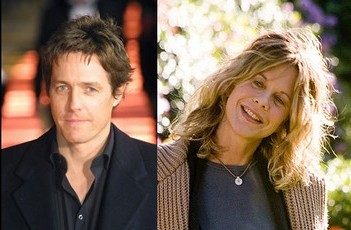
Consider most any romantic comedy you’ve ever seen. The lead actor, probably Hugh Grant, plays some “regular guy” on his way to do “regular guy stuff”, like go see his fiancée give a lecture at a book store. (She’s probably played by Julia Roberts). And as he walks down some New York City street being absentminded, goofy and charming all at once in his special way, he arrives at the corner only to see a suitably adorable woman (probably Meg Ryan) sitting at a table on the restaurant’s patio. Hugh, not yet seen by Meg, of course immediately sits down at a table near by and cleverly covers his face with his upside-down menu so he can watch her sip wine and write letters. (And of course he’ll soon regret it when her boyfriend, probably Jude Law, startles him and Hugh spills red wine all over his shirt.)


Did or Didn’t Hugh act knowingly here, and did he ‘deliberate’? Let’s go over Aristotle’s checklist:
1) Who was acting? Hugh is not yet insane so he is well aware that he is acting and in relation to a pretty lady.
2) He has no apparent tools but perhaps his boyish charm, affable manner and British accent.
3) The action is for getting near the pretty lady and perhaps meeting her.
4) It is done sheepishly, even boyishly, of course.
He meets the criteria so he is definitely not acting in ignorance, he is acting knowingly. And he’s not under coercion – humans don’t go into heat. And clearly it depends on him. So he has acted voluntarily. You may want to say that he still might have deliberated on the issue, but then you’re just being difficult. We’ve all been in situations where we acted all of a sudden. We suddenly want pizza, or to go to the book store, or to walk down this street instead of that one. Its really stretching the notion of “deliberation”, but its not at all stretching the idea of “knowing” what you’re doing.
Next time we’ll try to decide whether Hugh was a bad person by discussing impulsiveness, weakness, and finalizing our discussion of knowing what you are doing.