Monday, February 7, 2011

How to Understand The Epicureans on Emotion, Part II of II

As I explained in the last post, Epicureans believe that we all have a fundamental desire to pursue pleasure, and that to fulfill this desire, we'll actually sometimes have to avoid some pleasures. Specifically, we need to avoid pain-creating pleasures (e.g. doing hard drugs) and even pursue pleasure-creating pains (e.g. taking awful-tasting medicine).

That's certainly a tough lesson for many to learn, but it has the ring of truth to it, and, at least in my case, experience says it's often true. Perhaps you're one of the lucky ones who think all this is rather obvious and that there's not much to see here. Either way, lets look a little deeper because there's plenty more to see.

Do we really ALWAYS act to avoid pain and fear / to get pleasure?

Taking the claim that we always act to seek pleasure / avoid pain at face value may seem at times brilliantly simply and at other times a cliché or an uninformative tautology.

Consider the following:

1. Pleasure is the avoidance of pain

2. All action is to avoid pain

3. If its true that when our desires are eliminated, we do not act, then when we eliminate pain, we do not act until there is another possibility of removing pain.

That is, it appears what we're agreeing to is that when we succeed in eliminating pain, we cease to have desires, and so we cease to have any reason to act, so we don't act.

Does that have the ring of truth or sound like a tautology? Hardly. Its actually a strange thing to consider. I mean, I can imagine you could argue that someone in a drunk stupor, high on drugs, having just achieved orgasm or having completed a delicious meal could be 'sated' in such a way as to have no desire to do anything.


Homer, having achieved the absence of pain, ceases to act

For a time. Specifically, until some other 'pain' interferes with our state of repose.  But then all we really seem to have learned is that we'll always be hungry and that the effort to satisfy certain hungers will pay off longer or better than others. But Plato and Aristotle already made that very clear.

So what in the world are we really saying in agreeing with the 'obvious' truths that pleasure is the absence of pain and all action is to avoid pain?

What's really happening here?

Ask yourself this - what actually happens when you, by luck or by careful planning, act in a way that truly maximizes your pleasure?

The first thing that occurs to me in asking myself that is that in such cases its highly likely that it involved a lot more than a stroke of luck, my brain - more or less consciously - was deeply involved. And the more such 'maximized pleasure' moments one has, the more likely it is that more than just luck was involved.

So the first thing I'd feel good about concluding is that some of the times that I really maximize my pleasure require a bit of thought. But I also have to accept that other times its more the case that I fell back on some training - which may have required thought in the past, but little now.

For example, the goal of having a tasty snack is a simple, good goal. It doesn't require a whole lot of thinking. But in fulfilling it you do have to have the implicit awareness that not everything that looks tasty is tasty.

So when reaching into the cookie jar for some Oreos, you might recall the time you accidentally got some nasty off-brand cookie and so double check what you pulled out this time. That would be 'goal awareness' plus 'realizing' or 'knowing' that looks can be deceiving.

The epicurean maxims we've been discussing can handle this. And actually, thats nice - in a way they are saying we can judge without deliberating. That's a good thing, and its in agreement with P-A-L. But there's going to be a few problems.

Let's quickly note that Plato, Aristotle, Lucretius and Epicurus all basically agree on some key points:

1. Every action is done for the sake of getting to some ultimate end. Depending on who you ask, that the ultimate goal could be said to be accumulating wealth, political power, sexual conquests, or perhaps a life of the mind.

2. But as far as the philosophers I noted above, they're all pretty much in agreement that the ultimate end isn't really any one of those things but rather happiness. A major caveat - each one of the philosophers mentioned has subtle and interesting differences in just what happinessis.

3. They do, however, stand in agreement that achieving happiness is mostly up to us and requires us to be virtuous. But that means that they also agree that being happy requires some level of control over our desires.

The issue, as I tried to make plain at the beginning of this project, is that its going to take a solid understanding of human psychology to determine  what makes humans happy in general, and what will make you happy.

Not a rhetorical question: Just how far does 'all action is for the avoidance of pain' go in that direction?

Identifying the Problems Epicureanism has with Emotion

Epicurus strikes out from this basic agreement with P-A-L do to his thoughts on how to deal with the fact that we sometimes choose to act in ways that do not give us what we seek, pleasure, but instead give us the opposite.

Epicurus thinks that when we act so that we end up in real pain, its caused by both chosen/conscious actions and by reflexive actions,including emotion-driven actions, even though we never intend for this to happen.

Remember, we always seek pleasure, we always act to get pleasure. When the emotions sometimes lead you to pain, they make you wrong about the outcome your actions will lead to.

That is, emotions cause you to think improperly, to be mistaken about the facts of the matter, and so to incorrectly choose what will bring you pleasure. Not only that, acting emotionally is sometimes choosing to act in ways that do not give us what we seek, but instead give us the opposite.

As such, emotions need to be eliminated. They're just too dangerous. And they, on the surface at least, contradict a major Epicurean tenet - that we always act to pursue pleasure.

Rhetorical question: Is happiness an emotion or isn't it?

Let's be clear - Epicurus thinks that when we fail to achieve pleasure, we chose to act for pleasure but were wrong about what we thought we'd achieve. After all, we to some extent  always chose to act.  Similarly, Epicurus also believes that even more or less unchosen acts that lead to real pain (not pleasure-creating pains) are the opposite of what we 'wanted' to achieve.

That is, whether or not we are acting in 'full choice', or acting 'instinctively' or 'reflexively', act that induce real pain are errors. And we definitely want to be conscious of what motivates our chosen actions, as this will help avoid future errors. So he counsels that we hone our abilities to control 'instinctual' or 'reflexive' acts taken to avoid pain.

But are we ever going to consistently get what we want - no pain or fear - by listening to Epicurus' advice that only the proper pursuit of necessary desires will ensure our desires are truly fulfilled?  That is, can we and should we act exclusively and correctly for the repose of the mind and body and nothing more? That's certainly the prescription.He encapsulates all this when he says “the pleasant life comes from searching out the motives for all choice and avoidance, and banishing mere opinions (like many emotions), to which are due the greatest disturbances of the spirit”.

Conclusion

Alright, I've been slow-playing my criticisms of Epicurus' take on the emotions and how they influence his moral philosophy but its time to play my hand.

The emotions are real trouble for Epicurus' theory for the simple reason that a person's success at understanding and controlling the emotions will determine how good an epicurean she will be.

Epicurus agrees with Plato and Aristotle that in some situations, certain emotions will prove exceedingly difficult to avoid. At its core Epicureanism is advising us that only a small subset of our desires - the natural and necessary - is at all necessary for and conducive to happiness. That's why Epicurus insists we understand the types of desires. Knowing what's what will allow you to act in a way so as to have and maintain a healthy body and a mind free of disturbance. And because of the fact unmodulated or ungoverned emotions can work powerfully against this goal, he wants to throw the baby out with the bathwater and eliminate emotions.

The problem for Epicureanism as a guiding moral philosophy, what leads it to this conclusion, stems from the fact that for most people who might try to be epicureans precious little of what we do is a result of conscious deliberation. And thus to make it work we're going to have to find some way to train ourselves to act appropriately in cases where we're not consciously considering the true nature of the desire we're dealing with. But how is this training supposed to work? How do you raise a child this way and how do you reverse-engineer it in a mature adult?

I'll remind you one last time that according to Epicureanism, young or old, educated or ignorant, we always act to achieve happiness or pleasure, to avoid pain or fear. But just what does that mean when we in fact do not often consciously think about our actions and what is really motivating our desires?

It means that we often get tricked. It means that in order for most of us to really be happy, somehow we must both consciously and non-consciously avoid errors in determining what is actually best for us, what we really need to do and what only seems necessary.  We need some mechanism or mechanisms to make sure we only pursue the absolutely necessary desires, no matter our level of conscious attention. Unfortunately, Epicurus refuses to accept what Plato, Aristole and Lucretius did - the emotions can be just such mechanisms.

In order for normal people like us to succeed as epicureans given our limitations in concentration, we need to be trained. This is not news, and in fact, as you no doubt have noticed society does do a lot of training through the mores it passes along. So does organized religion. For example, until quite recently, society trained homosexuals to repress their sexuality, at the cost of tremendous stress and unhappiness. Many religions still do.  And more positively, traditional sexual expectations for heterosexuals, though also stressful, perhapsworked to lower infidelity in marriage and by extention lowered the rate of divorce, arguably providing better homes for young children.

But how do such mores work? The way they are passed on, usually in childhood, makes it pretty clear they are not appealing to our rational faculty. We don't get logical or philosophical arguements for the rules of society or religion. Instead it seems clear that the emotions, including pride, fear, shame, anger and the need for love are deeply involved. Much more than involved.

In reality, we know it to be true from experience - it just makes sense - that properly calibrated emotional responses to situations are exactlythe efficient, practical, successful mechanisms by which we can increase the likelihood that we can have the well-trained character that would help us approach the goal of desiring only what is truly going to make us happy.

However, Epicureanism not only discourages this, it flatly claims that strong emotions are to be completely eliminated and generally speaking, all emotions should be eradicated. Even though Epicurus had the benefit of studying Aristotle's thinking on the matter which fleshes out convincingly the idea that in some cases its highly desireable,correct even, for you to strongly feel specific emotions.

As I think Plato, Aristotle and Lucretius made plain, and as I'll explain in greater detail later, the emotions are exactly the sort of thing to strongly influence you to act quickly and assertively to achieve a desire you're body thinks is necessary. Its unquestionable that to perform this service they need a significant level of monitoring. I argued that this insight is at the core of Plato's psychology. Epicurus, to his discredit, misses this point.

For him, the emotions are so powerful and damaging that they simply offer too much of a chance for error and so simply offer too much likelihood for pain. And the successful 'emotion-controller' would have to be already nearly perfect in character not to succumb to negative impulses. Thus Epicurus says we need to eliminate them.
But this is an unrealistic goal, and given the tremendous force for good education and action that the emotions in fact can be, its an unworthy goal.
The emotions are not a problem to be avoided, or a rough patch to be smoothed. They are an integral part of our organism that needs to be enhanced.


Tuesday, November 2, 2010

Epicurus and the Epicurean Philosophy, pt 1 of 2

Introduction

 
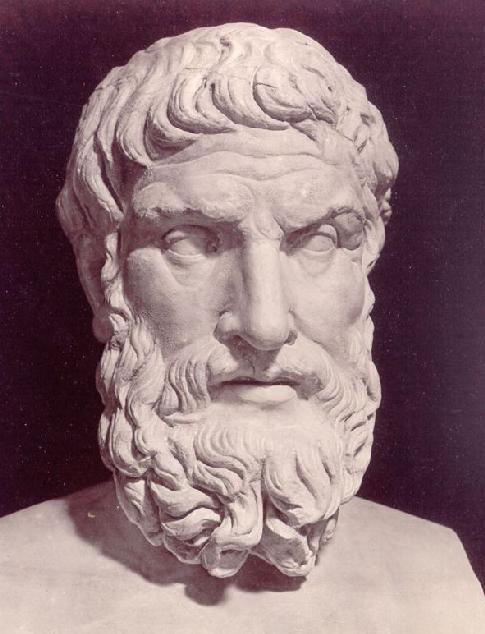
Epicurus, the first Epicurean
Epicurus, born 7 years after Plato died, was the founder and namesake of the Epicurean philosophy. But let's be clear from the top that he is definitely not the sort of epicurean you probably think of when you see that word.

 
Modern 'epicurean'
Still, there's a lot of great things to be said for the old-school epicureans too. For instance, Lucretius already showed us some very important epicurean concepts, such how strict they were about physicalism. And I tried to show how clearly what Lucretius said about psychology, thinking and the emotions fit in just fine with Plato and Aristotle's thoughts on the matter.

Happily, a lot of what we've already said will count for Epicurus too, and so epicureanism in general. But not everything. There are some fundamental beliefs held by Epicurus that I think end up derailing his take on the emotions. So, at the end of the day, the theory I'm putting forth doesn't turn into the P-A-L-E theory, but remains the much better-sounding P-A-L theory.
Lets start with some good stuff before attacking the bad stuff.

Core Epicurean Beliefs about Psychology

The most fundamental thing about epicurean psychology  is the idea that there are 3 types of desires, and they are what motivate us to act. The types are

1. Natural and necessary
2. Merely natural
3. Vain

Of course you knew it would be more complicated than that. Actually, category 1 has 3 sub-types that need to be understood, (category 2 and 3 don't have sub-types). The sub-types of "natural and necessary" desires are

1. Desires necessary for happiness
2. Desires necessary for rest or peacefulness of the body
3. Desires necessary for life

The reason these are so fundamentally important is that Epicurus was convinced that properly understanding what motivates your actions  would allow you to make all your choices for the sake of

1. The health of the body
and
2. Keeping the psyche free from disturbance

In a nutshell, if you know what motivates you to act, you can learn to act only for the sake of mental and physical repose.

 
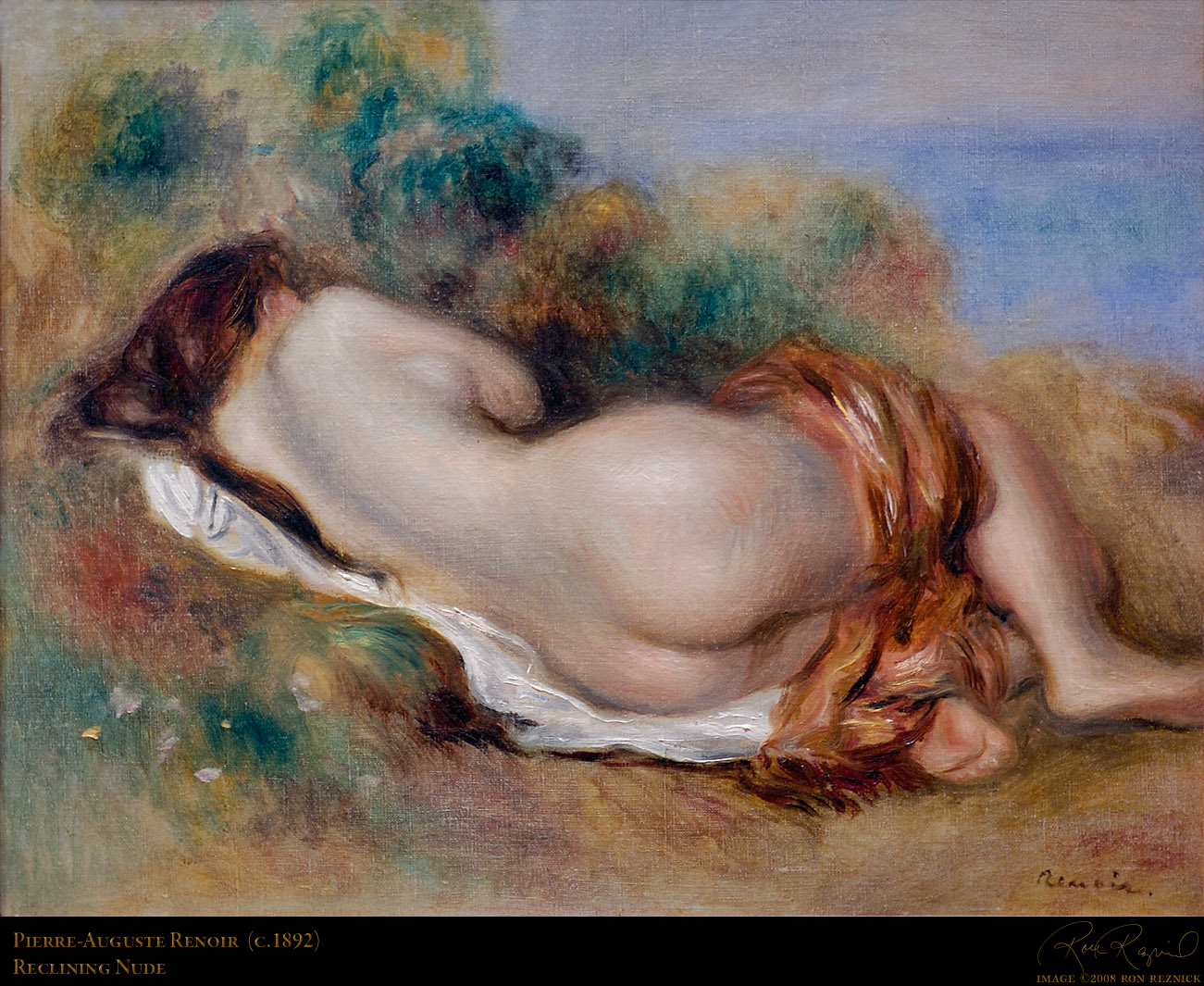
Renoir's "Reclining Nude", sometimes called 'Repose'. I think it captures a bit of both ancient and modern epicureanism. I wonder what she's reading!
Epicurus on Choice

A fundamental belief in epicureanism is that we ALWAYS act to avoid pain and fear. Its just a matter of whether our choices are properly in line with that fact. Ideally, we choose consciously to act so as to avoid pain and fear, and at the same time for the sake of mental and physical repose.  In the end avoiding pain & fear is the same trying to get repose. We can therefore say that when we're doing well we correctly chose to act in order to avoid pain & fear, or that we choose to act so as to have a healthy body and a mind free from disturbance, and mean the same thing.

Its important to note that we're not talking about reflexive responses to fear or pleasure stimuli, certainly not essentially such responses. For instance, in their way of looking at it, fear is an anxious anticipation of something you know is coming.

So while its not right to say that everything we do to achieve this goals is consciously chosen, we do have the ability to be conscious of all things that motivate all the choice-behavior and avoidance-behavior we end up doing. For instance, I may not choose to respond negatively and aggressively when a stranger puts an empty beer glass on my table as he walks by, but I chose to have a drink, I chose to go where I ended up, and as such I presumably chose to be around people who would do such things. When I then act to avoid the pain of being publicly diminished in that way, it shouldn't be too surprising.

Clearly, if I decide that the stranger deserves a beer dumped on them, I've made a bad choice. Yet my actions were an attempt to avoid pain.
 
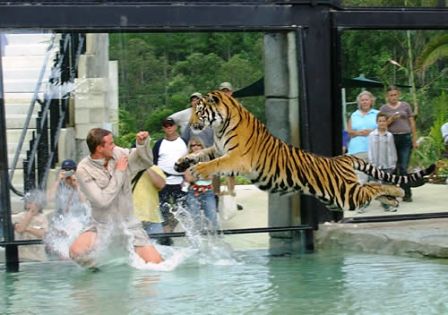
In what way did Darius choose to get beat up?
 
But how much of  of the things that motivate counter-productive efforts are going to be really chosen in the fully aware way I might, after staring at a draught beer list chose one beer over all the others?

Epicurus would counsel us to recall that there are three types of desires. One type, vain desires, are not "automatic" or "reflexes", ever. We only have them because we in some strong sense of the word chose them.  If you really have to get a Duvel over an Amstel, its not because of some fundamental need of human beings.

Other desires, the merely natural ones, come to us in a sense automatically, like the desire to have something to drink (I don't mean a 'thirst' where you are parched). But we can choose to ignore them almost completely, at least for a time.

And  as for the necessary desires, such as for sustenance, hydration or sleep, though they certainly must be satisfied, we still have a pretty good degree of leeway as to just how or to what extent we will satisfy them beyond the level absolutely required for physical and mental repose. I mean, yes you have to eat, but whether you skip a few meals or add a few extra is up to you.

So in the end, to a very large degree, pretty much everything you do, at least the way in which you do it, is up to you. Even if as a matter of fact you aren't "consciously' choosing to do the thing you are doing at any particular time.

Let's review. According to Epicurus, whether an action is consciously chosen or not, we ALWAYS act to avoid pain and fear.

This conclusion is based on three assumptions so we better see what we think of them.

1. Pleasure is the first good and natural to us. (The number one and original thing everyone seeks out is pleasure).
2. Every pleasure is good, but not every pleasure is something you should choose to get. (Just because sex is good doesn't mean you should sleep with everyone who will sleep with you).
3. Though every pain is an evil, some should not be avoided.

As it turns out, in Epicurus' mind, #2 and #3 are the same point. After all seeking pleasure is avoiding pain, and avoiding pain is seeking pleasure. So if there are some things you shouldn't do, its because they will somehow get rid or pleasure or cause pain even though you'd think they'd do the opposite.  Pleasure, at the end of the day, is "freedom from pain in the body and from trouble in the mind". And we know from experience that some pleasures do lead to pain, and that some pains lead to pleasure. If you're not sure of the last one just think "flu shots" or "blood sample" or even "Listerine".

But the point here is that epicureans believe that if you agree with them that pleasure is the first good, to fulfill your natural desire for pleasure, you will have to avoid some pleasures to get pleasure. We need to avoid "pain-creating pleasures" and even purse "pleasure-creating  pains".

I think that's already a good lesson but if it seems obvious to you, don't worry. I assure you its deeper than that. To see how smart this actually is, next time we will consider what it really means that we ALWAYS act to avoid pain and fear and to get pleasure.

Wednesday, October 27, 2010

The Last Words on Lucretius

Intro

As I said earlier, Lucretius thinks the mind controls cognition and the particles it is made up of are localized in the chest. On the other hand, anima, the vital spirit, is everywhere else in the body but the mid breast. Vital spirit’s particles move to the sway of mind particles and give the body sensation; thanks to vital spirit “even the teeth share in sensation”. Keep that in mind as we talk below about "registering" and "bodily awareness".
The View from 10,000 Feet
Echoing Plato’s analogy of the psyche with a country, where the rational part is the leaders and the spirited part is the military,

Basically like this, but I see courage as an example of the broader concept "spiritedness"
Lucretius says that while mind rules, vital spirit is the “body’s guard and cause of health”. It’s a safety mechanism to protect your flesh. In fact, vital spirit and flesh “twine together with common roots” and he thinks trying to tear them apart would be all but impossible, like taking separating the scent out of curry. He also describes it as being so thin and light, so sensitive, that even thoughts can make it move.
Getting Our Hands Dirty
Now that we have the basics on what mind and vital spirit, animus and anima, are, its time to get down to brass tacks. We’ve noted that Lucretius is a strict physicalist, believing that everything that exists is made out of physical particles. And he thinks that mind and spirit are one and the same thing, yet that mind is cognitive and spirit is not. But why should the same substance be able to act so differently?
Isn’t that paradoxical, or worse, impossible? Well, to avoid that conclusion he’s going to need to give us a satisfactory explanation for this apparent strangeness.
The reason, he says, why they can be the same “stuff” but act so differently is that while the mind is affected the same way as the body, vital spirit is “not one and simple”. What he means is that there are different properties to mind and spirit, they are not pure and simple like, say, hydrogen, carbon or iron. Instead mind and spirit are two subtypes of the same basic type of stuff, an “uber-soul” material, vital spirit. And vital spirit is not a basic element either. It’s a mixture of some sort, like water or soda.
We don’t need to go into the actual physical stuff he thinks make up vital spirit, the mind and spirit because its just not even close to being right as far as what we know to be the components of the nervous system. How could it have been, it would be about 1,500 years before the microscope was invented,

Seawater maginfied 25x
and roughly another 360 before the Electroencephalograph (EEG,  the measurement of the electrical activity of the brain) became widely available.

EEGs measure the activity of neurons
But if you’re interested in knowing more, contact me and I’ll send you my fairly detailed discussion of it from my dissertation.
Whatever physical bits it is actually made of, in practice this vital spirit is basically what we’d call “bodily awareness”, the mechanism that allows us to do things like avoid running into people walking past us the other way even by the slimmest of margins. And as I’ve said before, given the way he describes them it’s fair to think of its components, animus and anima, as what we’d say are aspects of our overall nervous system.
So to put a bow on it, he is saying that the best explanation for our capabilities is that there is a physical system spread throughout the body that is responsive to outside stimuli, and that is directly connected to a centralized core, made of the same material. This core component uses in various ways the input to guide the actions/responses of the whole being. This centralized material, when activated by the spread-out system, is able to think and feel to varying degrees. Or as we’d say today, the nervous system allows for or creates the initial conditions for basic things like reflexes but also for our ability to measure and judge, and our ability for abstract thought.
Let’s be clear: Lucretius does not think that the chest-brain-stuff (animus) simply takes in data from the anima, stops the flow and considers the data, then sends commands to a body that is silently waiting. Instead the components that make up vital spirit allow for duplex communication between the brain and the rest of the nervous system throughout the body. It allows for immediate response to outside stimuli by real-time measurement - he explains that the body feels things that don’t quite rouse the spirit, and that our bodies are actually sentient – aware – in a way akin to the way the mind is. But this duplex process also allows for conscious analysis of the stimuli, the body’s responses, the results of the responses, what goals are being achieved, and what goals might be better, as well as the ability to seek after those goals. The body can run “on its own” but a conscious person can study her reactions and change her behavior to her preference. After all, they are made of the same stuff.
Yet its interesting to note and accept with Lucretius that our bodies register a lot more info than we ever actually register consciously. Think of micro-facial expressions, gut reactions, goose bumps, mosquito bites, or even navigating foot traffic on a busy sidewalk. These are all clearly things the body “notes” – or as I will put it sometimes, registers – even though you as a thinking person aren’t aware. And common sense tells us he’s right: not only are we not conscious of things such as mosquitoes biting us, we have no feeling whatsoever of things such as radiation, yet clearly our body registers it, sadly, to very poor results.
Emotion
Lucretius thinks that emotions are qualities of both animus and anima; they both process and communicate information, and so they can’t be irrational. But its hard for him to call them rational too. He’s convinced that emotions are felt physically in the heart and concludes in part from this that the mid-region of the breast is the seat of intellect and mind. But just because they are felt there doesn’t mean they are only felt there. In fact, he believes that there is more than one kind of emotion; one more or less purely mental (but of course physical) and “spirit-based” or “visceral” emotion that is much deeper and stronger but of course still “cognitive”.
On Lucretius’ account, due to the interactions of the physical particles that make up vital spirit, the mind emotes in an interesting way. Basically, anyone in an emotionally charged situation, anyone emotionally agitated, ends up at whatever emotion they end up at (or calm) by going through a progression from the burn of anger, to the chill of fright, and eventually back to calmness, as the duplex communication between the mind and spirit continues.  Whether true or not, given the importance that anger and fear responses have to survival this makes some sense.  These emotions are utterly important to our survival. The problem of course is that they can sometimes be a little antiquated and therefore lead us to misunderstand what our best reactions to a perceived stress should be.
The idea is that for some emotions, say fear for instance, up to a certain threshold only the mind is “emoting”, but there is a tipping point where the vital spirit is roused. As such, the chest-brain area is usually the part handling (and ‘showing” fears, but after a point the whole spirit system gets involved and you see other behaviors related to fear.
He also explains that while vital spirit moves to the “sway” of the mind, it does not always follow mind’s influence. At least sometimes, perhaps even most of the time, it does, but it doesn’t have to be that way. Whether it does or doesn’t depends on what beliefs are followed. When incoherent or mistaken beliefs are followed, we get bad desires and bad results. When correct beliefs are followed we get good desire and satisfaction. So to the extent an emotion keeps you from making a smart choice, or makes you feel like doing something stupid, or counter-productive, they would seem to be irrational, yet the real thing to blame here is not that system, its job is to protect your body, and its perceiving a threat!

A very basic kind of fear
But the animus! It’s the job of the animus to be rational, to oversee things. If the mind doesn’t do its job the times when it is within its power to do so, then the cause must be a physiological limitation, stupidity, laziness, or bad character. Nothing about emotions, or mind, or spirit makes it have to be that emotions and emotional responses have to be irrational or bad.
Conclusion
So we’ve seen Lucretius follow Plato and Aristotle very closely in some fundamentally important respects: 1) He’s keenly sensitive to the impact the emotions can have on other thoughts and on actions; 2) He believes there are two types of emotions; one more or less purely ‘mental’ and one ‘spirit-based’; more visceral and deeply felt, but still cognitive. (Of course both are still purely physical.) While some, say an existential dread, are cases where the mind is by and large the only part emoting, there may be a threshold past which the vital spirit is roused. Similarly, there can be emotions, say fear of a predator, that are more basic and active at the level of the spirit, but past a certain point the rest of the spirit system, the mind, may get involved; 3) he believes in duplex communication between the ‘mind’ and the body, and that 4) the mind and the body are both physical. In sum, he’s in basic agreement with Plato and Aristotle’s insights on ethics and psychology. At the very least nothing they said is directly contradicted by Lucretius.
The improvement Lucretius makes is that he not only understands that there must be a physiological explanation to all this, he tries to explain it. At length. And with some very imaginative, even penetrating insights. In fact, it was absolutely state-of-the-art science for 55 B.C. In fact, it was pretty state-of-the-art for a lot longer than that!
Combining the thoughts of Plato, Aristotle and Lucretius on the emotions, the mind, and ethics, we can see a pretty well worked out, defensible position. I call it the P-A-L account, and I call the theory of emotions in the P-A-L account the “pluralist account” of emotions. That’s in comparison to the visceral account, first developed by Homer, and the third candidate-account, which we're about to start discussing, cognitivism.
Review and Preview
We have a “scientific” (physiologically centered), state-of-the-art for its time explanation of how the mind and body are  parts of a functioning system, how they interact and impact each other, and what thinking and the emotions are. And it all fits in just fine with the psychological and ethical insights of Plato and Aristotle. In fact, I think this P-A-L account is so defensible that I try to update it to current state of the art science in the final chapter of my dissertation, and that updated version is my own belief about how the emotions work in ethics.
Unfortunately, This P-A-L account didn’t exactly set the world on fire at the time. Not long after it was all put into place the Stoics came along and did every thing they could to bury it alive. The fact that I had to write this dissertation at all gives you a good idea of how successful they were. Unfortunately for us.
But before we get to them we have to look at the Epicureans, who have their own strengths and weaknesses to examine.

We'll have to see what you think after the next handful of posts!

Saturday, October 16, 2010

Lucretius' Conception of Mind

A Recap and a Rolling Start

As I said last time, Lucretius believes that when the mind is pushed-upon a wave of particles sets in motion, stirring the will. If you read my posts on Plato this should remind you of Plato's similar claims on how the outside world impinges upon the mind and body.

But to "stir the will" has to be explained in physical terms too, and Lucretius comes up with a theoretical physical system called "vital spirit" to do so. More on that later but for now we'll note that the physical substance vital spirit is diffused throughout out the body.

Whatever you call the stuff that moves the body around, the real trick is explaining the interconnectedness of the body and mind, of will and physical action, in a thoroughly materialist, physiologically centered manner. And a good, useful explanation will allow us to understand what it means for the mind to see and understand anything at all. Unless you're up to date on current neurophysiology, this is a pretty tall task.

So yeah, Lucretius has to be pretty bright to come up with such a system nearly 2000 years ago.

But enough back-slapping.

Isn't Physical "Soul" a cop-out?

On Lucretius' account every living thing is replete with "soul", which is completely material, just as much as your foot, ear and every other part of your body. (So don't you who believe in immaterial souls try to hijack this, and don't those of you who eschew such talk get upset!). Material soul is not a cop-out, but I'm going to tell you right now the concept gets pretty hairy so we're going take it nice and slow.

Lucretius actually uses two terms that can be translated into English as "soul": anima, which, for you religious types, is the one traditionally equated with what you mean by soul, and animus, a newer (relatively!) term he uses to make a very novel distinction.

Most simply put, in Lucretius' theory its the difference between the irrational and the rational mind. But even this is hiding some serious complexity. Both the "irrational" anima and the "rational" animus are part of (or two types of) the same stuff, vital spirit. Vital spirit is an admixture of various physical elements and, as I said above, is distributed throughout the body. We'll see that actually it works in a way similar to the central and sympathetic nervous systems. First lets focus on the part of all this that is most accessible to us, the animus, the rational part, what Plato and Aristotle called the psyche.

Animus or Psyche, its the Mind for Plato, Aristotle and Lucretius

For Lucretius, the animus, the rational part of the vital spirit, is responsible for all higher cognitive functions, things like abstract thought and planning ahead. So an able translation of animus is "mind', with all its implications of higher order thought and moral understanding. Lucretius at times also calls it "intellect", "head", "guiding principle" and "dominant force".

As funny as it may seem, Lucretius believed, (like many of his contemporaries, Aristotle and Homer) that mind is located in the middle of the breast. It will be very useful to keep that in mind so you can picture how he can talk about "thinking" in your chest, which will help you to better understand him overall. But let me say it again - like the rest of the vital spirit - mind is composed of matter.

A Primer on Mental Activity

Lucretius makes it clear that vital spirit causes sensibility in us, which allows the mind to have experience. And in order for action to occur, the mind must "judge" the benefits/merits of the results of an action. But this does not have to be done consciously. Just as important, the mind is not a 2-way transmitter (e.g., a walkie talkie) that, for example, "feels" a bug crawling on the skin and then tells the hand to squash it.

NO:

Not the way the mind and body interact

Think about why he is right that this doesn't make sense. If the mind were like a walkie-talkie, by definition only one end at a time can communicate. So if you had a bug on your leg, what would have to happen for you to get rid of it?

First, the body would feel the pressure on your flesh. For your mind to "know it" too would require one of four things:
1) Luckily, at the same moment when the body felt the pressure, the mind happened to not communicating out any messages and so able to receive transmission,
2) The body would not only feel the pressure on the skin, but also "knows" that the mind should stop transmitting and could force it to by accompanying important messages with a message such as "over" to tell the brain to start talking,
3) The body itself would just "know" how to stop the bug (like a reflex),
4) The body is constantly transmitting messages whether or not the mind is in a position to hear them, and sometimes the brain listens in for whatever reason.

However plausible you find any of these explanations, they raise more questions than they answer. Instead, Lucretius, like Plato and Aristotle, thinks there is a special, interactive and reciprocal communication between the body and the mind (and the emotions), a process I will continue to refer to as duplex communication. The mind and the body are both duplex transmitters, such as cellular phones, which allow two constantly running communications to both be understood by their targets.

YES:


For Lucretius, Plato and Aristole, how the mind and body interact

More Details on Mind and Thought

According to Lucretius, mind is able to represent events to itself much faster than they actually occur or would happen. For example, if in real life, if Tim Lincecum throws his two-seam fastball 90 miles per hour, the hitter has .46 seconds to swing at it. Go ahead and imagine that now.


Big Time Timmy Jim

However long you took to visualize it, says Lucretius, it was quite a bit faster than .46 seconds. Another example of the relative speed of mind is how long it takes for the mind to "think ahead", as when you get a joke before its completed. (Here's an article on thought-speed).

I'll get into it more in the next post, but this also relates to something that will be very important to the P-A-L theory (when I finally flesh it out!). Not only is Lucretius really big on how fast mental representation is, he also makes it pretty clear that for the mind to "see" doesn't require deliberation. As he puts it, "within one moment of our sensation, many tinier moments are hidden whose existence reason discovers". And what he means by "discovers" is that the contents of our mental pictures are full of information "right there" and only need to be picked up or picked out. Yet we also superimpose assumptions on the information we process with our minds, so that things not "perceived by the senses" seem to us just like sense perceptions.

But what of it? Well it means that for Lucretius some (maybe even most) things are understood by the senses and not just "passively received" by them. And that means that a lot of what you might call "analysis" or "judging" doesn't require conscious deliberation. And as far as ethics goes, it also means that he is in agreement with Epicurus' saying that in a way we choose to engage in poor or irrational behavior because we often have a strong will to impose questionable - or even flat out wrong - interpretations on the things we see and hear.

We'll come back next time to look at the anima and more fully understand vital spirit.


Monday, October 11, 2010

Introducing Lucretius

Introduction

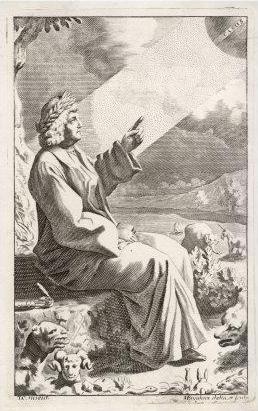
I think that the Roman poet Lucretius (Titus Lucretius Carus) is the most underrated philosopher of the ancient world. There, I said it.


So far as we know, he only created one work, De Rerum Natura, which is usually translated as On the Nature of Things. As the title suggests, it attempts to explain the universe, including the workings of the human mind. In poetic form. In Latin. And you've probably never heard of it. I hadn't heard of it myself until about halfway through grad school, and I didn't read it all until I was working on my dissertation. But the point is, it is without question the best piece work ever put out by any thinker who has ever called himself an Epicurean.

You might think it funny, then, that I group him with Plato and Aristotle and not in my treatment (soon to come) of Epicureanism. There are a couple of reasons for that: 1) I think Epicureanism, generally speaking, is quite close to Platonism and Aristotelianism when it comes to ethics; 2) I think Lucretius differs from orthodox Epicureanism in ways that allow him to be read as a "physicalist" "scientific" or "materialist" continuation of the psychological and ethical ideas I've discussed in Plato and Aristotle. I don't want to put too fine a point on that, in the end I don't need to convince anyone that Lucretius was secretly a Platonist or an Aristotelian and not an Epicurean. I just need to explain to you how Lucretius can fairly be read as usefully and consistently continuing what they started regarding how the mind works and how that feeds into ethics. I do this not only because it strikes me as correct, but in building out the argument of my thesis, I thought it useful and even important to show how the Plato-Aristotle view of the mind might look in a more "scientific" setting.

The First thing You Need to Know about Lucretius

Lucretius, as is true of any Epicurean, was a materialist. And he was an amazingly thorough materialist, even by their standards. I'm going explain that and then I hope you'll see why I'm going to switch to "physicalist" for the rest of my discussion of him.

The main point of materialism is that everything is made out of actual physical stuff. There are no ghosts, souls, or anything else of the kind unless you can explain how they are made out of physical particles. And everything that happens in the world happens to stuff. In On the Nature of Things Lucretius sets out to explain how this all might work, with the best science of his time. An example of how very thorough he was - He argues that seeing is literally taking in atoms, in the ‘shape’ of the object one sees, which then physically impinge upon the mind.

Next time, we'll delve into Lucretius' conception of the mind.